

Villa Mosconi Bertani
A HISTORIC VILLA IN THE HEART OF VALPOLICELLA CLASSICA
HISTORY
During the period of ownership of the Mosconis, the villa became an important literary salon frequented by leading figures of the culture of the time, including the poet and scholar Ippolito Pindemonte. In the first half of the 1900s, the villa suffered years of neglect and vandalism which damaged the park and some of its rooms. In 1957, it was purchased and renovated by the Bertani family, who transformed it into the representative headquarters of the homonymous winery. Since 2012, the villa has been owned by the family of Gaetano Bertani, who continues the family tradition in the production of excellent wines.
VILLA
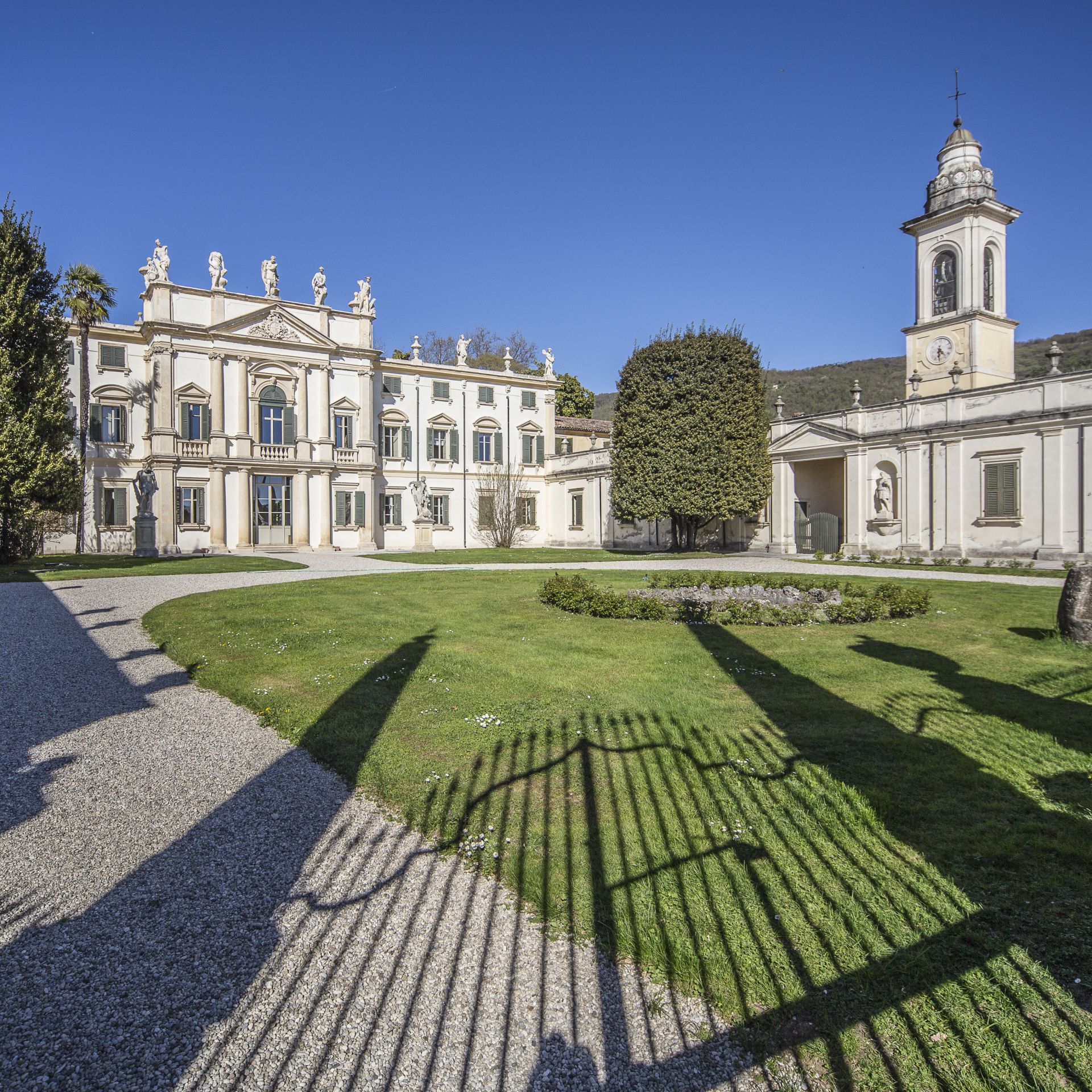
The villa consists of a main building with two low advanced wings, ending in symmetrical facades. Above the eastern wing stands the bell tower of the chapel dedicated to San Cajetan, while two gates give access to the cottages and cellars.
Built in the first half of the eighteenth century on commission from Giacomo Fattori, the first owner of the estate, the Veronese architect Adriano Cristofali completed the entire complex, including the central body of the villa, the chapel and the cellars. The villa was built on a previous settlement of the sixteenth century.
The intervention of the Fattori family, begun in 1710 to give an aristocratic atmosphere to the residence, had a self-celebratory purpose since the family had been awarded the title of count. The project, initially entrusted to the architect Lodovico Perini who died before the work began, was completed by Cristofali. He masterfully created the central body in a classic style and revisited the two perpendicular wings, creating a front garden and hiding the view of the side cottages to separate the area dedicated to relaxation from the agricultural one.
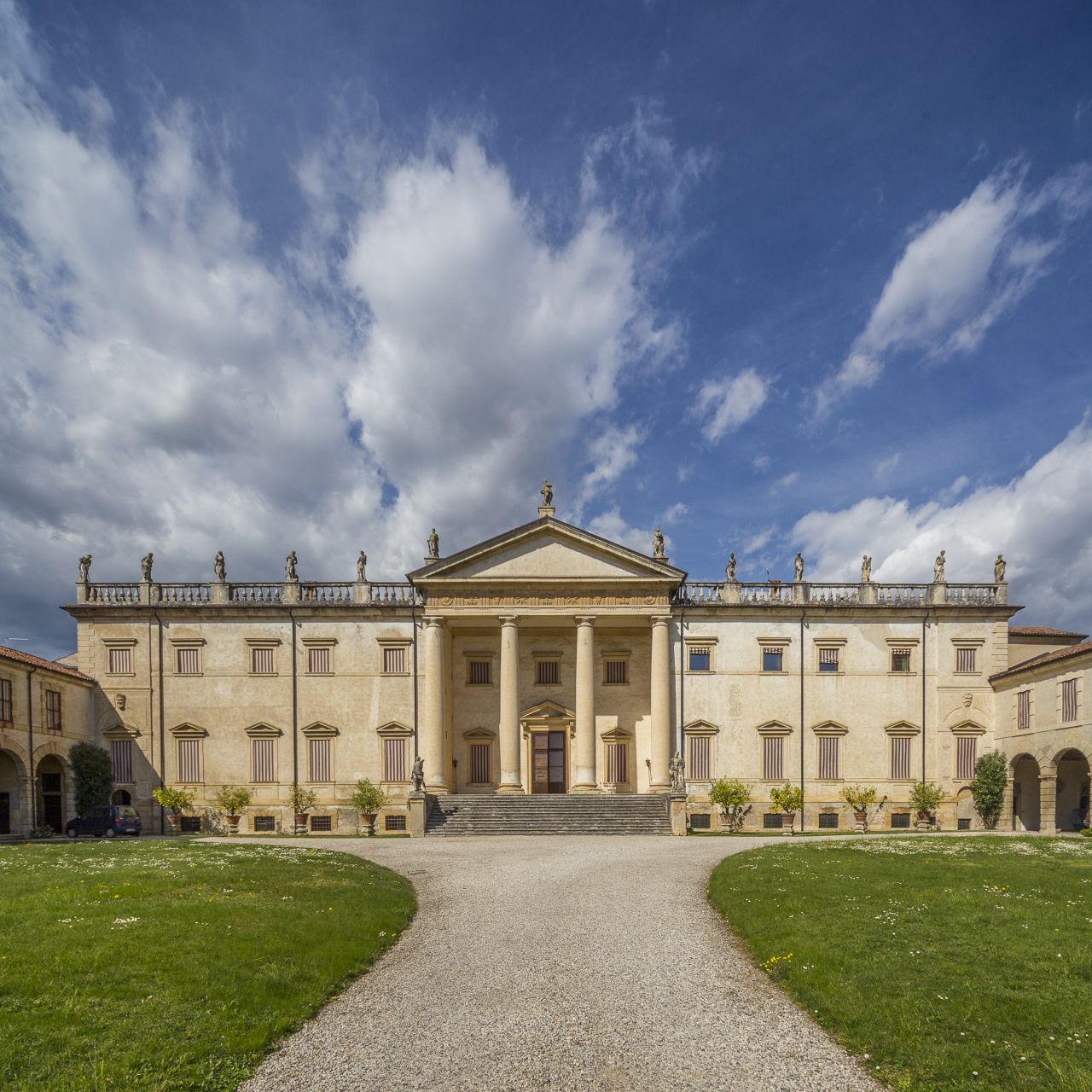
The manor house is spread over three floors, with a double architectural order: Tuscan on the ground floor and Ionic on the upper floor. The main façade has a tympanum with the Trezza coat of arms and nine statues of mythological deities. The statues in the garden are attributed to the sculptor Lorenzo Muttoni.
The inner building includes the beautifully frescoed hall of the Muses, which once hosted small performances of the Opera Buffa and later of the Opera Seria. The hall extends over the three floors of the villa and has niches painted with monochrome statues representing the Muses of the Arts, fantastic trompe l'oeil architectures that give perspective to the environment and monochrome paintings depicting Abundance, Justice and the satyrs that recall the four seasons. On the ceiling, a fresco represents the four seasons with Flora in the centre, accompanied by Spring, Summer, Autumn and Winter. The frescoes are the work of Emilian artists, including Prospero Pesci for the horizontal bands and Giuseppe Valliani, known as the Pistoiese, for the central fresco on the ceiling.
PARK
Towards the end of the eighteenth century, the idea of creating naturalistic complexes in harmony with the fashion of the time, at the beginning of Romanticism, began to spread in Verona too. The English garden was preferred, characterized by a landscaped and romantic atmosphere, with exotic plants, avenues, isolated corners and fake archaeological ruins, compared to the Italian garden, more orderly and predominantly green. The brothers Giacomo and Guglielmo Mosconi, following this trend, arranged the land behind the villa, creating a garden and a wooded area. They built a pond, fed by the springs on the property, with a central islet surrounded by tall Taxodiums, accessible via a small wooden bridge, and a coffee house inspired by similar structures in northern Europe. Ippolito Pindemonte also participated in the project of the romantic park, who introduced some influences of English origin.
In addition to the exotic plants on the islet and some cedars of Lebanon, the trees in the park are those typical of a wooded area. In 1820, Persico described a "garden varied by exotic plants", which also influenced the Veronese painter Angelo Dall'Oca Bianca.
On the edge of the lake there is a chalet, built at the suggestion of the poet Ippolito Pindemonte, who was inspired by springs and meadows seen in France during his holidays, as a guest of friends of Jean-Jacques Rousseau, of whom he was a great admirer. In the afternoon, the chalet was used for reading, perhaps after returning from a walk, while in the evening it was the ideal place for board games, such as chess, or moments enlivened by the sound of the harp, played by the countess's daughters.
In the park there is also an ice house, built at the end of the eighteenth century and used until the first half of the last century.
Inside the garden there are still statues, seats and a small gushing fountain. A large space enclosed by a wall, located behind the villa, not only encloses the garden, but also a vast vineyard, which gives the whole complex a garden-countryside atmosphere. A gate, with rusticated pillars decorated with cusps and ornamental vases, delimits the elegant courtyard in front of the villa, defining the front garden. The latter has a regular design with a large central circular flowerbed, used not only as an ornament, but also to regulate the flow of carriages entering and leaving the villa, and a small circular pool.
WINERY
The cultivation of the vineyard in this area has been documented since 1028, even if according to oral tradition the vine was already cultivated much earlier in the Arbizzano valley.
It was Luigi and Cesare Trezza, who took turns in the property from 1868 to 1931, who undertook a significant transformation of the viticulture and expanded and perfected the production of wine. Already in that period the wine produced in this cellar enjoyed great renown.
The Amarone Classico della Valpolicella, which dates back to 1936, originated in the cellars of our villa. In 1957, the cellar was purchased and renovated by the Bertani family, who made it their representative office.
Since 2012, the estate has been owned by the family of Gaetano Bertani, who continues the family tradition in the production of excellent wines at the Santa Maria di Gaetano Bertani estate.
Photogallery


Contacts
37024 Arbizzano - Santa Maria
045 602 0744
https://www.mosconibertani.it
booking@mosconibertani.it