


Itinerary 1: Pescantina - Dolcè
ROUTES ALONG THE RIVER
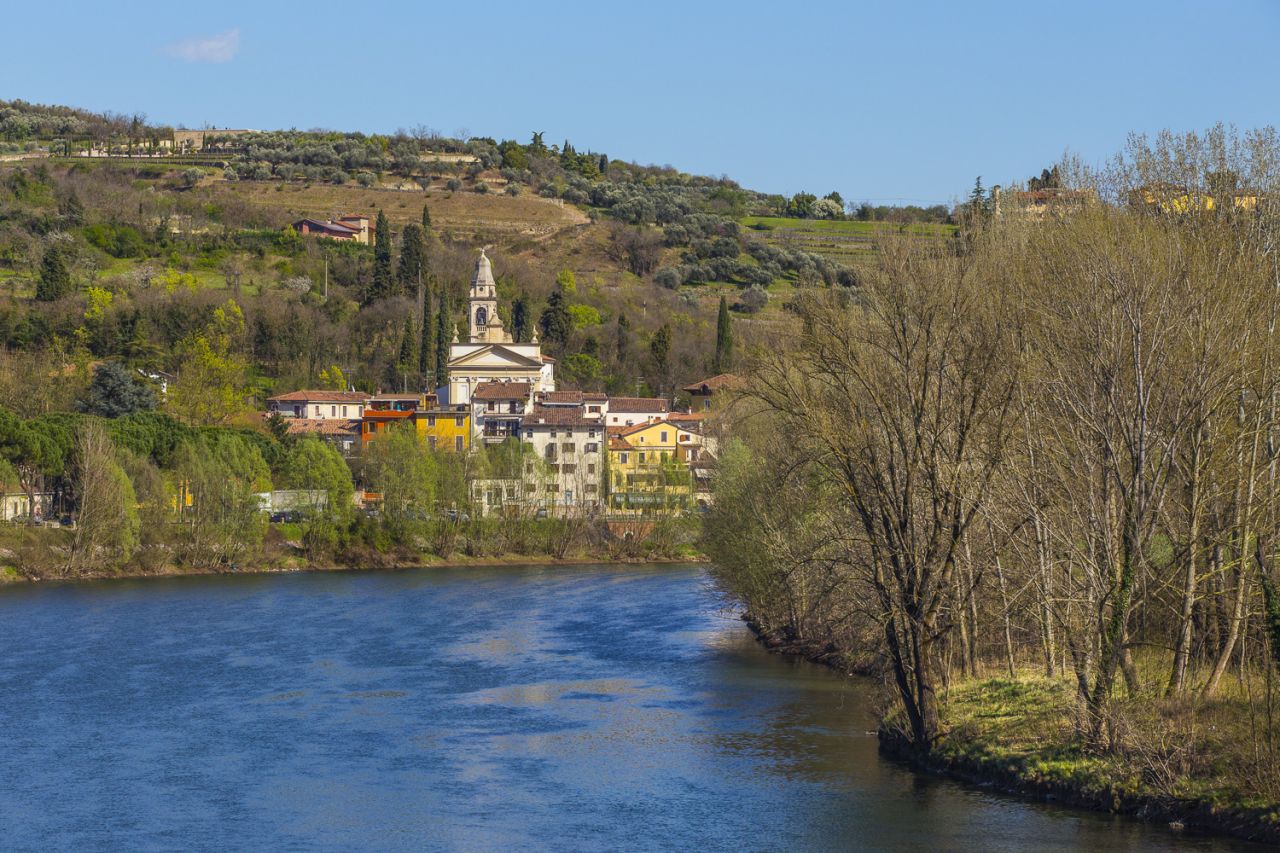
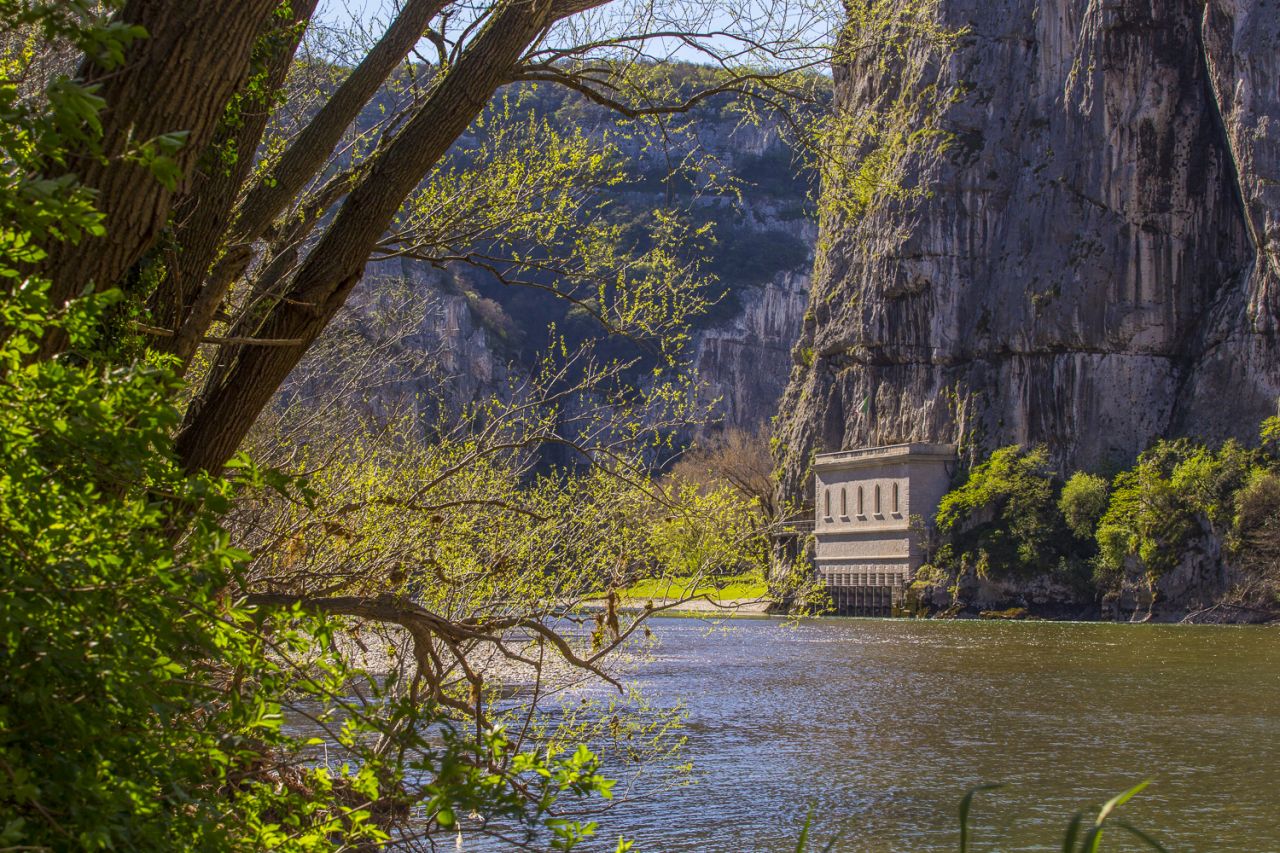
The itinerary unites the towns of Valpolicella along the Adige River. Parona, now part of the municipality of Verona, was an autonomous municipality until 1929, the first in Valpolicella for those coming from the city. Nature lovers can walk along the alzaia, or towpath, the road along the river on which the animals used to drag the boats up towards Trento, on foot, by bicycle or on horseback.
The route starts at the Parona railway bridge, touches the municipality of San Pietro at Nassar and then continues for 8 km from one end of the municipality of Pescantina to the other (Nassar, Termolè, Pescantina, Mandella, Arcè, Roveiago, Tegnente and Santa Lucia) and on one side there are cultivated fields
houses, small wooded areas, on the other the Adige River flows.
Amidst poplars, willows and locust trees one can glimpse the foundations of water wheels and irrigation canals, earthen mills and kilns.
PESCANTINA (16881 inhabitants), so called perhaps because the town with its port on the river 'fished' in the water: today the toponym refers to the extensive peach orchards that constitute an important economic resource for the area.
Once upon a time, Pescantina was a nodal centre for trade with the Atesina region and typically river boats were built there: boats, burchi and panciani.
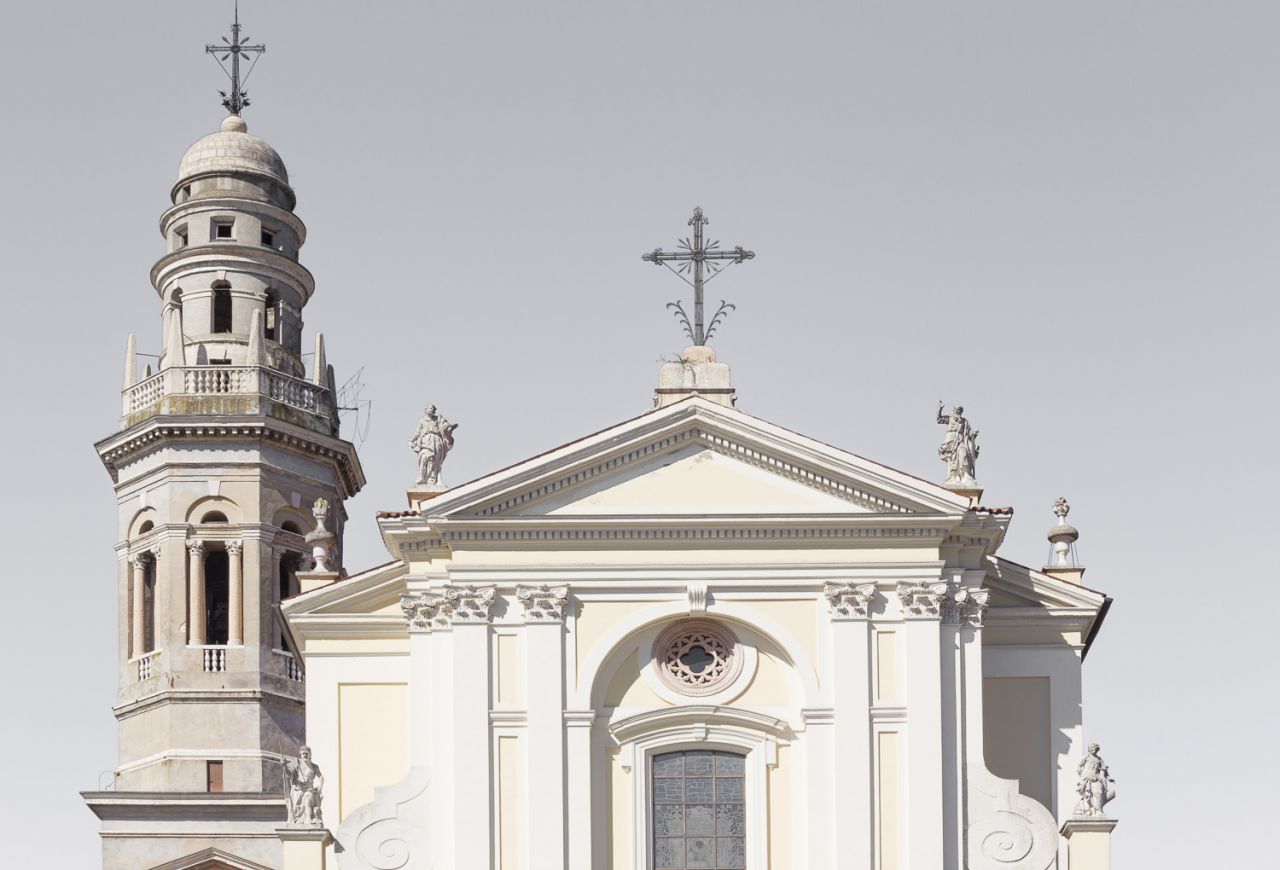
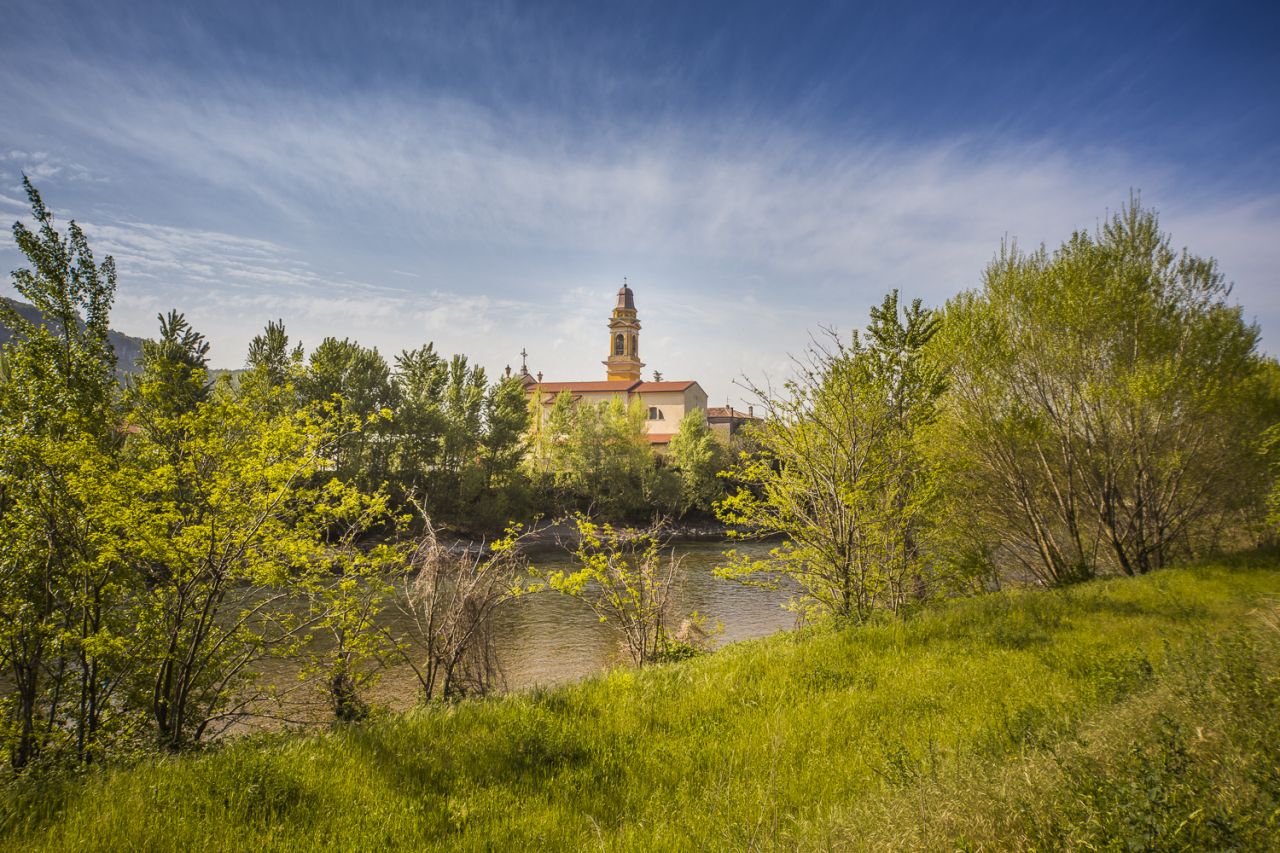
For a more in-depth cultural exploration, we recommend a visit to the parish church of San Lorenzo Martire in the hamlet of Mandella, built in 1753 to a design by Alessandro Pompei, in neoclassical style and enriched by the more than 80-metre-high bell tower built to a design by Giuseppe Barbieri in the first half of the 19th century.
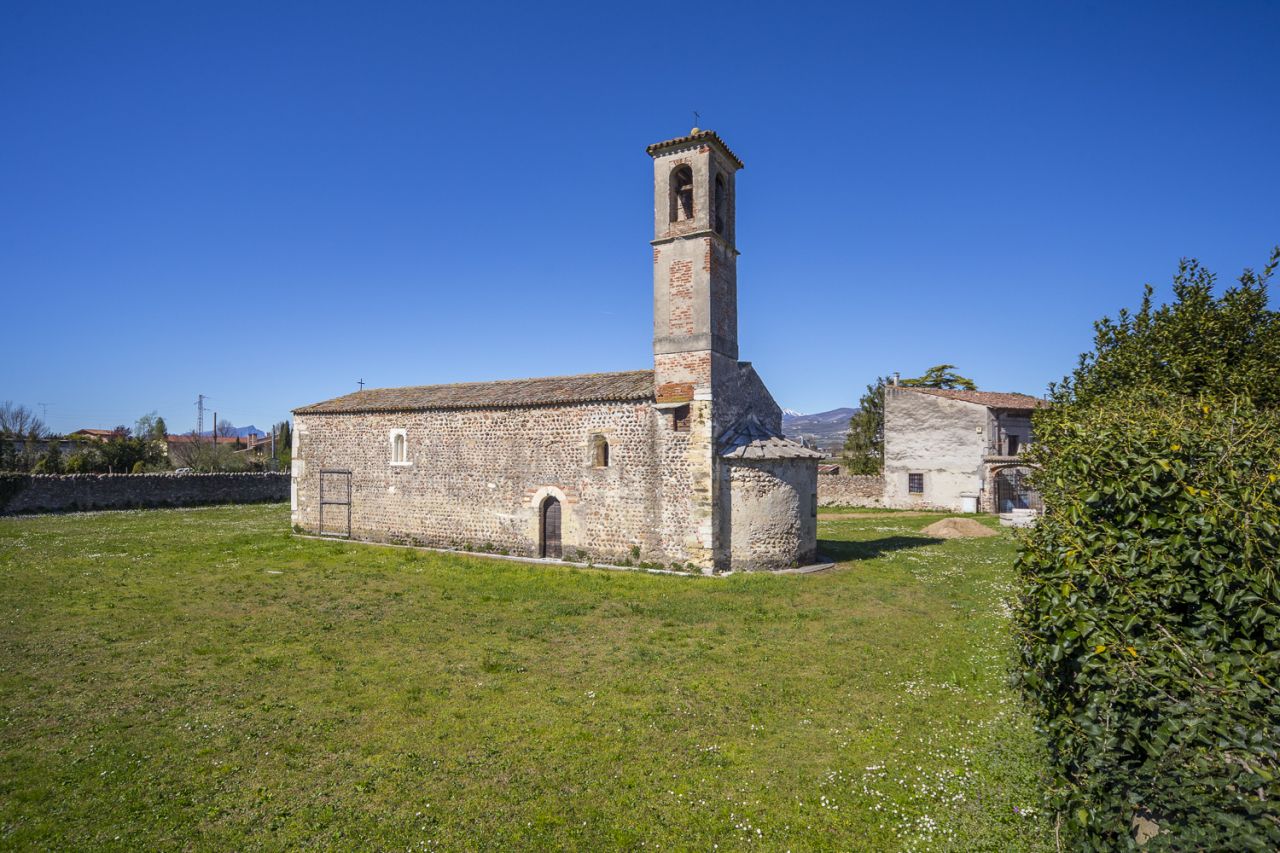
of the 19th century. San Lorenzo was built on a pre-existing Romanesque church, the remains of which are still visible on the eastern slope.
Other places of interest on the banks of the river are Settimo, with its villas, Arcè, where the frescoed Romanesque church of San Michele is located, and Ponton, home to Villa Nichesola, once attributed to Sanmicheli and now to Giulio Romano, with magnificent frescoes by Paolo Farinati.
Driving north up the Adige, we reach Volargne, a hamlet of the municipality of Dolcè (2631 inhabitants).
Here is Villa del Bene, a multi-building complex that was completed in 1560. The entrance gate in line with the mooring on the river is possibly the work of Michele Sanmicheli.
The interior of the villa is decorated by Domenico Brusasorzi, Gian Francesco Caroto, Nicola Crollalanza and Bernardino India with frescoes that extend throughout the main floor.
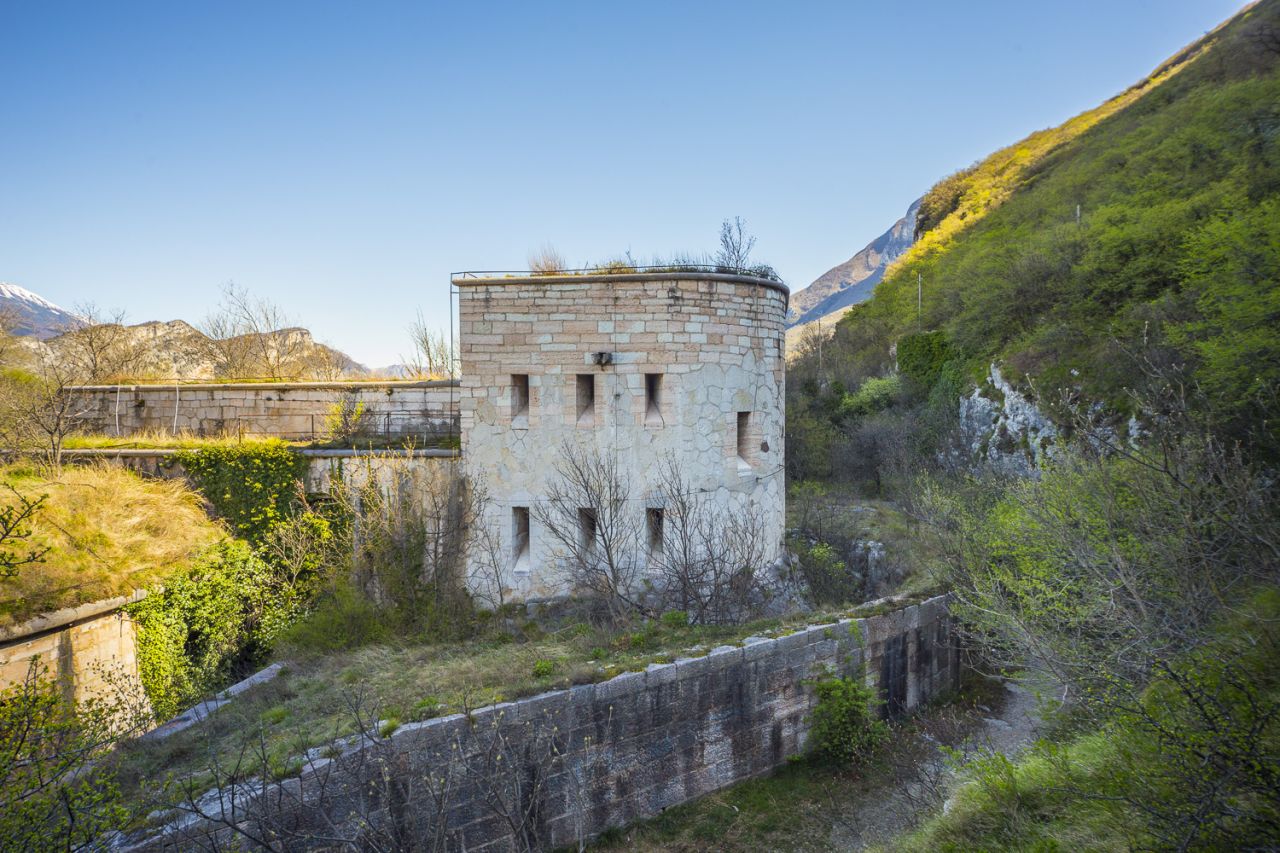
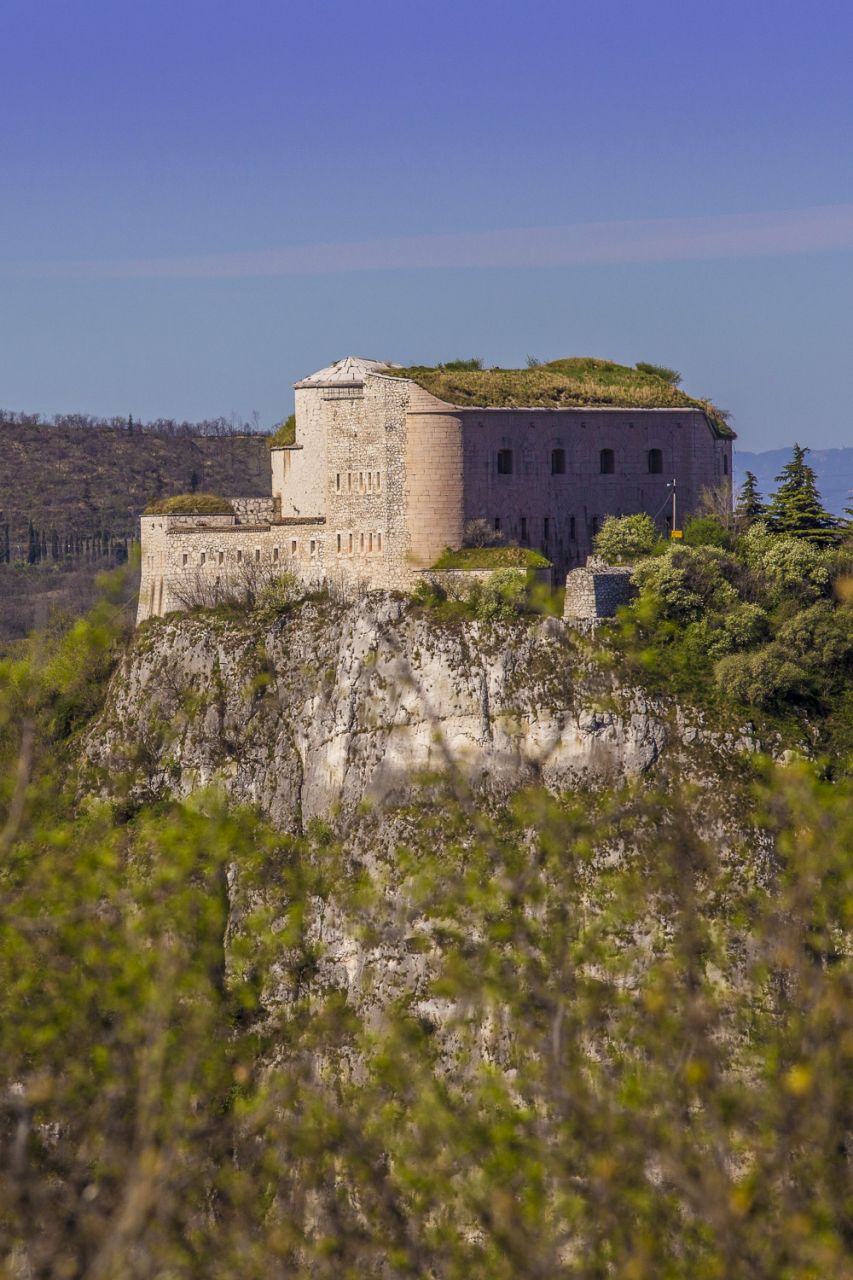
The territory of Dolcè in this section is characterised by imposing Austrian fortifications, a reminder of the transalpine domination present here until 1866. These structures were built between 1849 and 1852 to protect the Brenner road and the outlet of the Adige Valley.
The Austrian border barricade of Rivoli-Ceraino consisted of four forts: the Chiusa Veneta and the Hlawaty at Ceraino, the Mollinary at Monte di SantÕAmbrogio and on the right bank the Wohlgemuth at Rivoli. The first three, located on the left bank of the Adige River, can be reached along the Brenner State Road.
The first is found 2 km after Volargne, at the spectacular Ceraino lock: it is Fort Chiusa Veneta. It is located next to the hotel of the same name (with parking) and its ruins can be visited, although they are partly submerged by vegetation. The forts of Hlawaty and Monte are more difficult to reach as they are located along a military road overlooking the valley. The entrance to this road is
located at the nearby village of Ceraino (119 m) with the signposts Fort Hlawaty, Fort di Monte.
Photogallery