


Itinerary 2: Sant'Ambrogio
BETWEEN GRAPE AND STONE
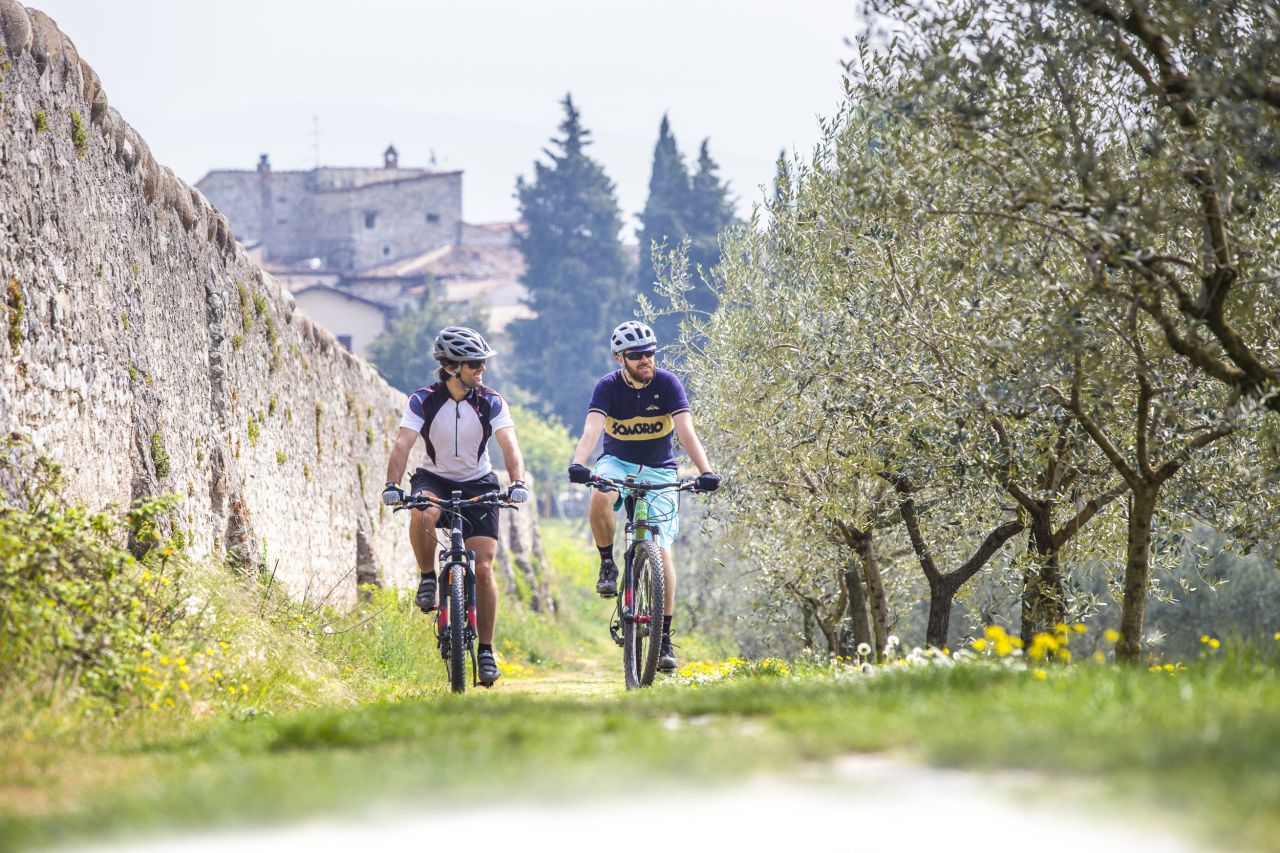
The proposed route, by car or bicycle, passes through Gargagnago, San Giorgio Ingannapoltron and for the more athletic, continues on to Mazzurega, Cavarena di Sotto and Fontanelle, ending back in Gargagnago.
The total distance is 9 km.
San Giorgio di Valpolicella can also be reached on foot in about 45 minutes (one way) via a path which, detaching itself from the main road not far from the church of Gargagnago, runs through the wooded vajo Ragnino up to the 375m asl of San Giorgio, from where there is a splendid view over Valpolicella and Lake Garda.
At Gargagnago, passing the parish church of Santa Maria della Misericordia (1378), which owes its neo-classical appearance to Bartolomeo Giuliari (1820), the thoughtfulness of Palladio's Venetian villas.
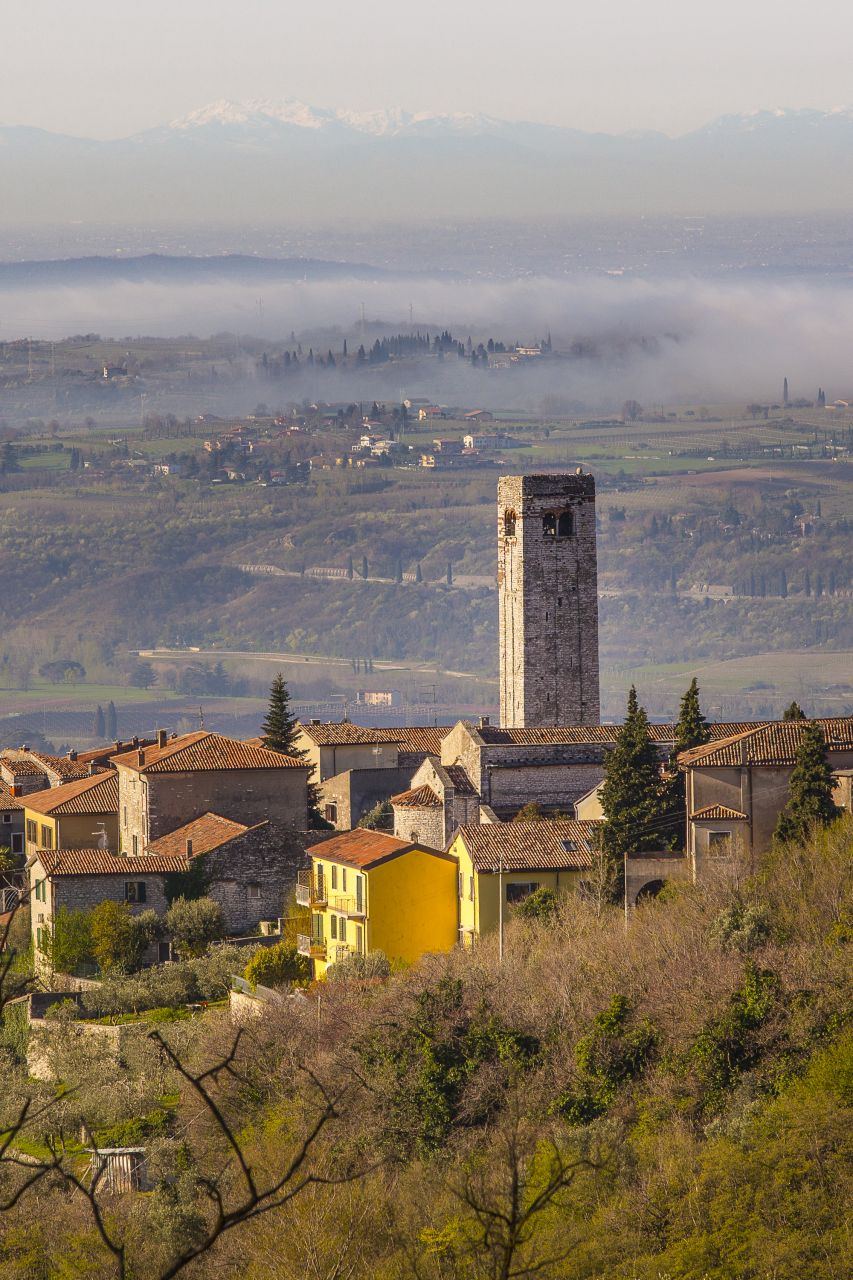
By car, after several hairpin bends, you reach San Giorgio di Valpolicella or Ingannapoltron.
The appellation traditionally refers to the fact that it deceives the armchair driver because its summit position deludes those approaching along the road that they have almost reached their destination. Ingannapoltron actually derives from Ganna, an ancient term meaning pile of stones, an indication of the wealth of stone material in the area.
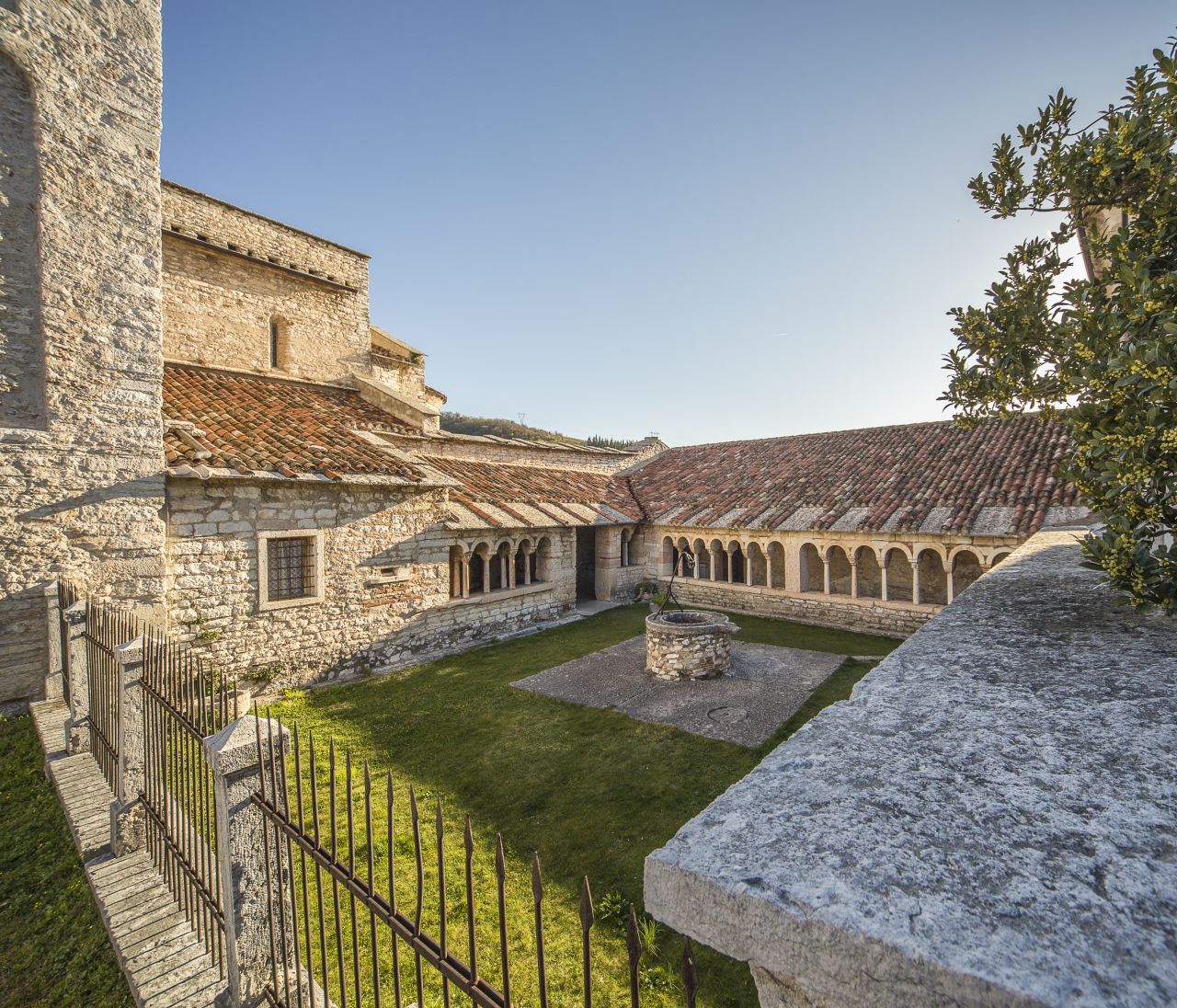
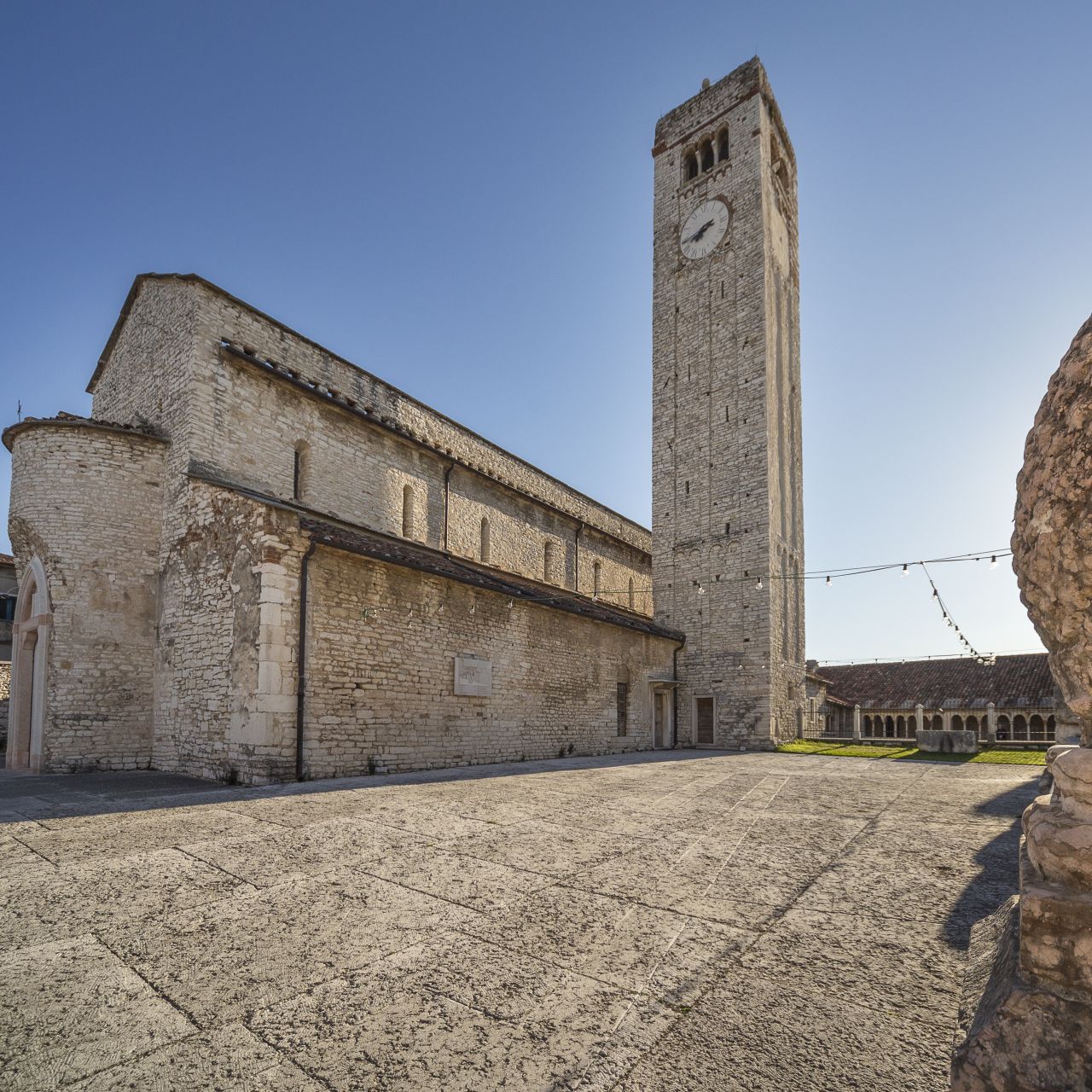
The town is home to the beautiful early mediaeval parish church (in existence since the 8th century, as testified by the inscription on the columns of the ciborium above the altar) built in local stone, with a monumental bell tower and a graceful cloister: archaeological excavations have documented the existence of a prehistoric settlement and a Roman sanctuary in this area.
The nearby Antiquarium houses the epigraphic findings of the Arùsnates, a population of probable Etruscan origin that had maintained their own divinities and cult traditions even after the arrival of the Romans.
After the visit, pausing to observe the panorama that sweeps from the vineyard slopes below to Lake Garda, one will notice both the area's wine-growing vocation (producer of Valpolicella Classico DOC, Amarone della Valpolicella and Recioto Classico DOC), and its marble-making vocation, with signs of quarries for the extraction of Veronese limestone and industrial plants for the processing of marble from all over the world.
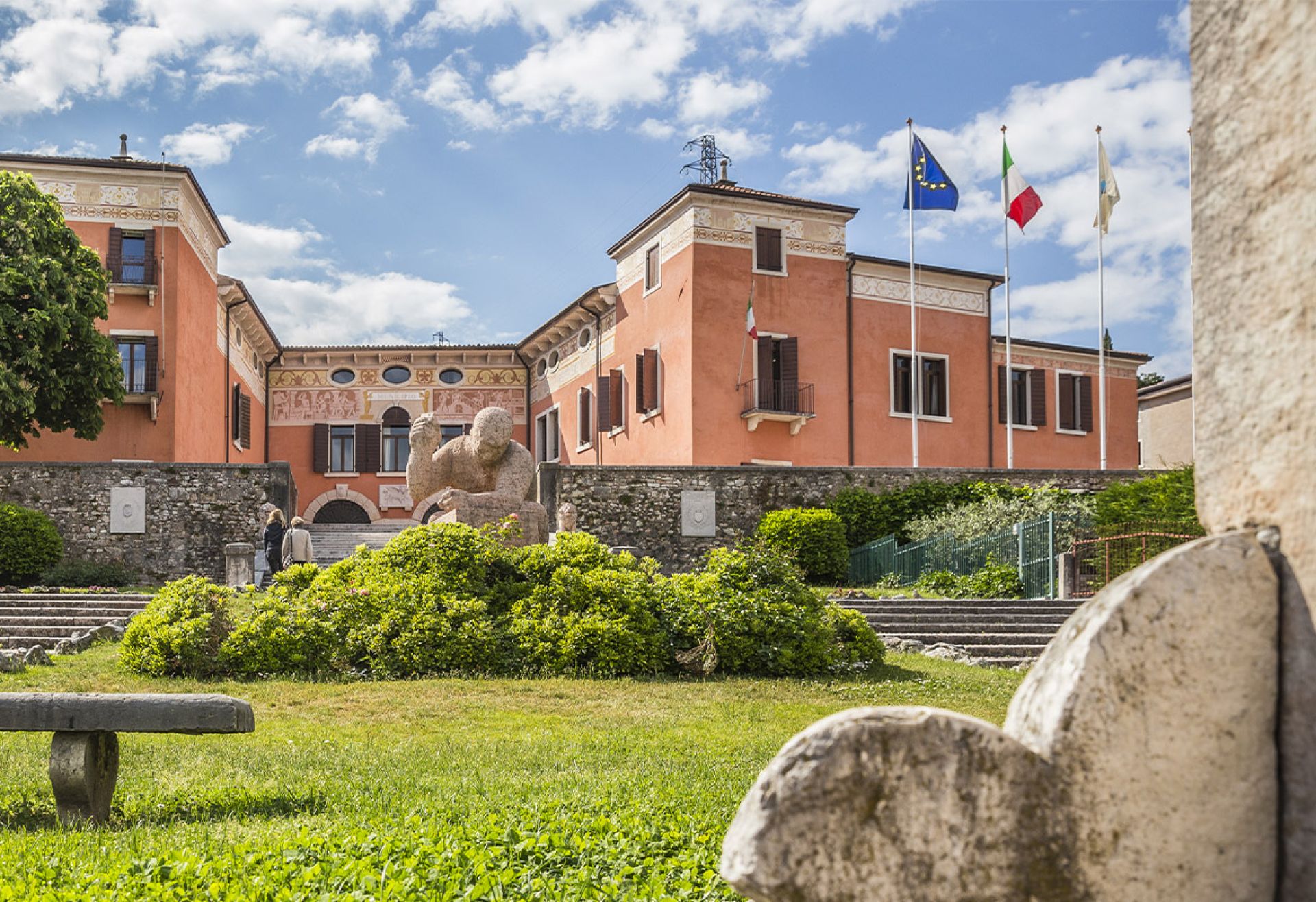
The municipality of Sant'Ambrogio is home to a fairground, originally built for an important marble fair called Marmomacc, and a Marble School, founded by Count Paolo Brenzoni in 1863.
San Giorgio is also famous for the folkloristic Festa delle Fae (a local term meaning broad beans), which takes place on the second Sunday in November, in which every head of the village receives a portion of a soup prepared with these legumes, along with onions, potatoes, lard and flour. The ritual distribution of this soup can be traced back to the pastoral chronicles of the bishop of Verona Ermolao Barbaro in 1460 and is also linked to the symbolism of broad beans, often associated with the departed and a symbol of immortality.
If you wish to visit the immediate surroundings of the village on foot, you can follow the indications of the nature trails on the panels displayed, according to the different difficulties and times. A proposal for a long but interesting walk (2 hours round trip) on the eastern slope of Monte Solane leads to the village of Mazzurega, the birthplace of the poet Bartolomeo Lorenzi (1732-1821) and his brother Francesco, a painter and pupil of the more famous Giambattista Tiepolo, but also the birthplace of the family of Antonio Badile (1480-1560), Paolo Veronese's master. If you have left your car in San Giorgio, we recommend returning to the car park. If, on the other hand, you have left your car at Gargagnago (3 hours there and back), after leaving the village, after about 1 km you come to a dirt road leading to an old abandoned house and then turn left to reach Cavarena di Sotto, a quarry area. After crossing a pine forest, we stop at Ca' Fontanelle, where there is a natural spring of water.
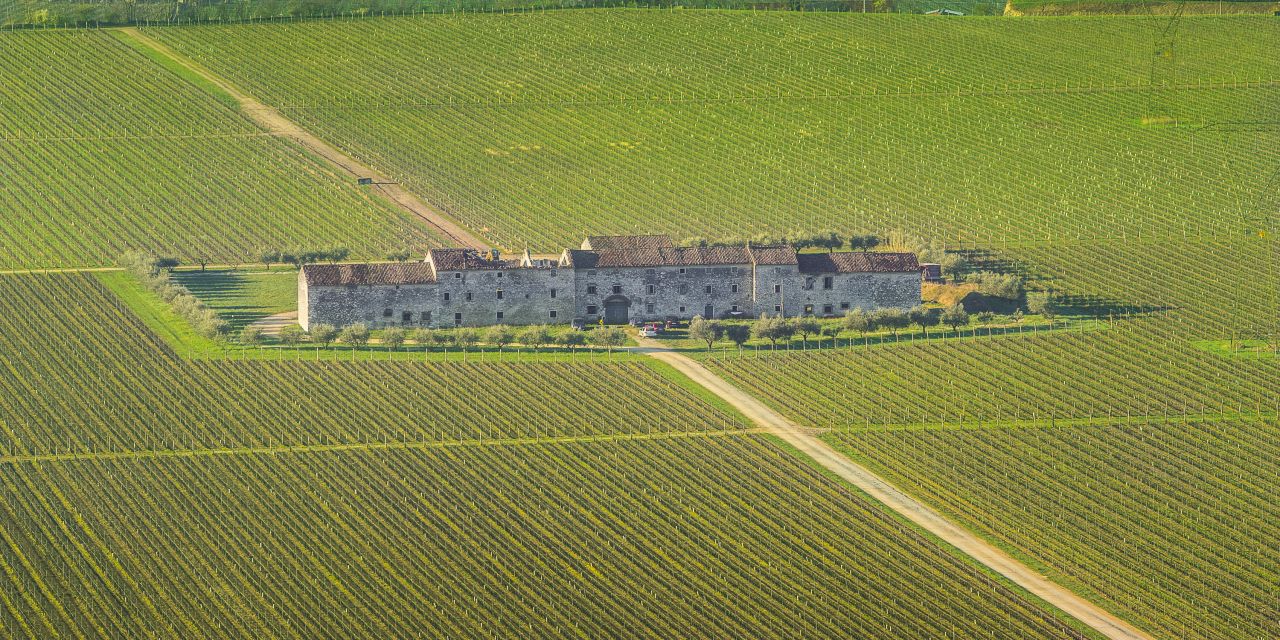
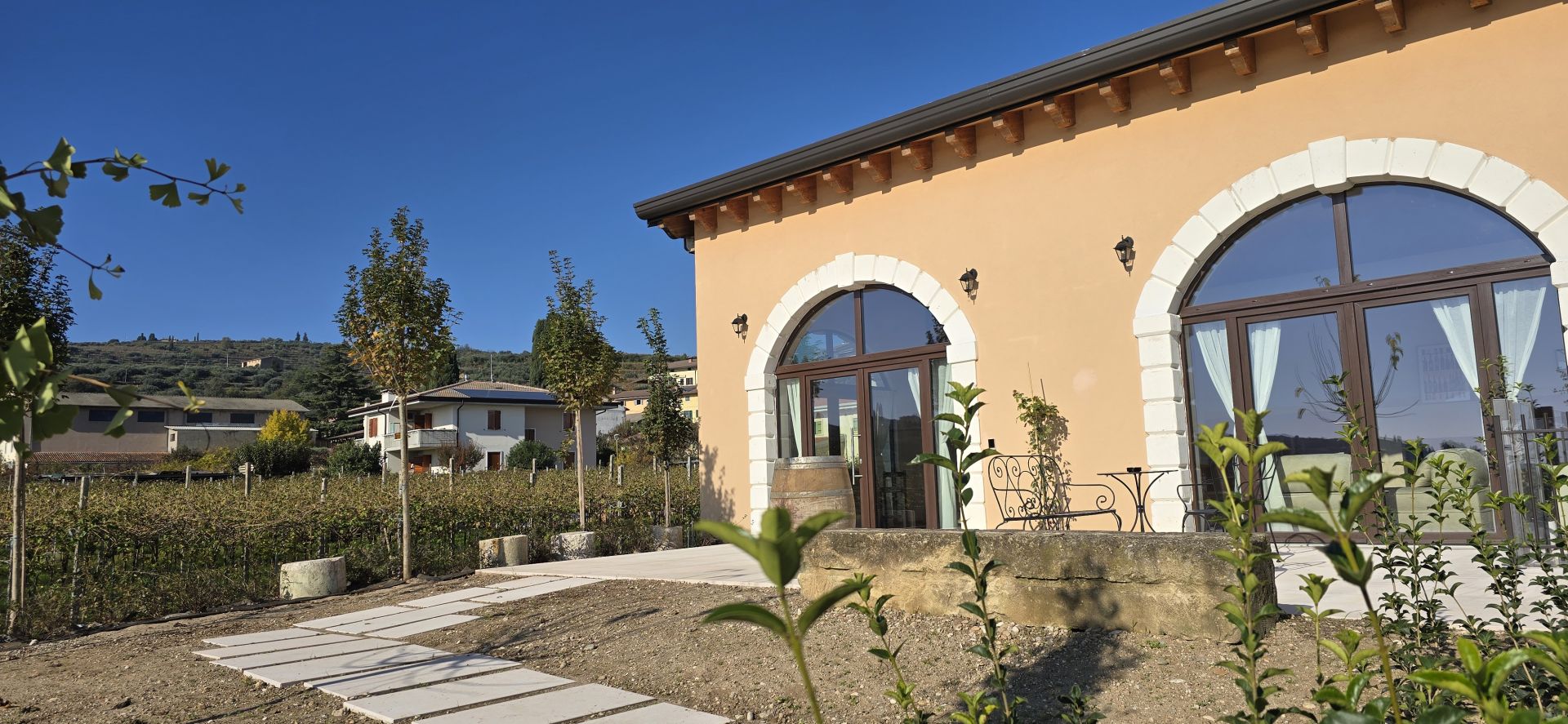
We then close the loop by descending again to Gargagnago, where we can see examples of local architecture with barns and courtyards whose entrances were always closed by arches.
Photogallery