

Villa Arvedi
THE LARGEST VENETIAN VILLA IN THE PROVINCE OF VERONA
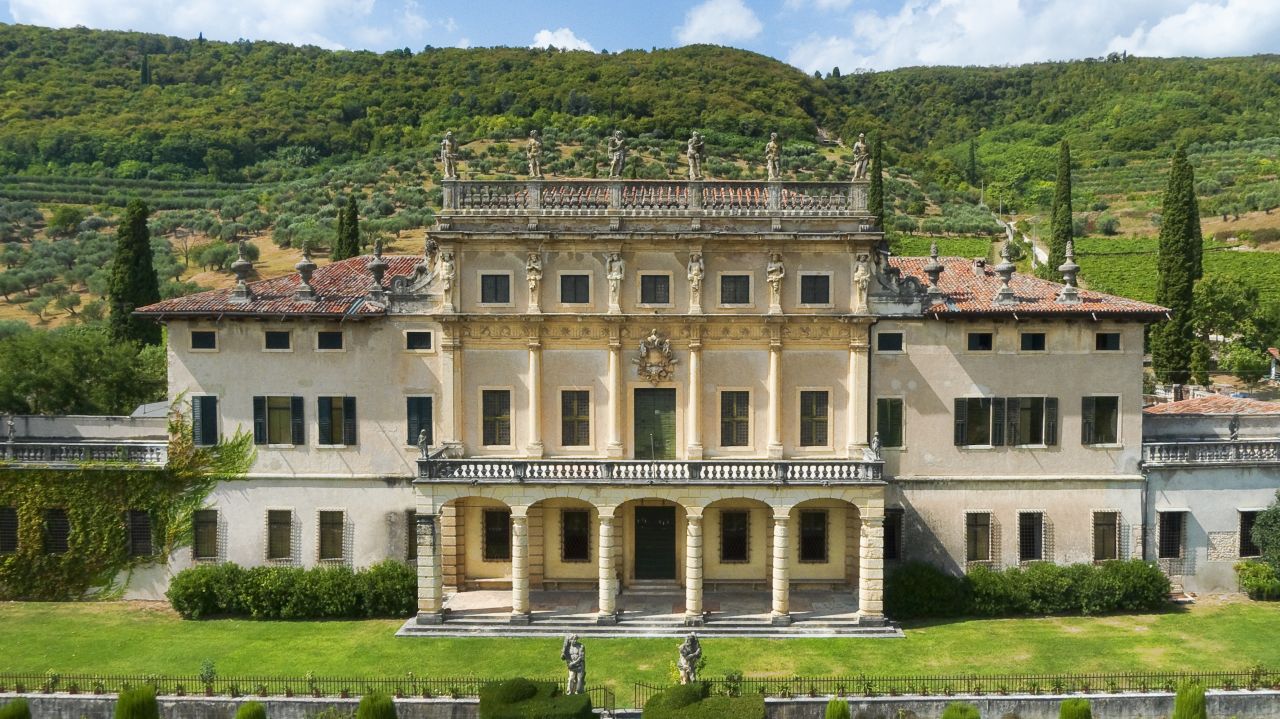
The Villa di Cuzzano was originally the palace-fortress of the Dal Verme family, who acquired land and farms both as men-at-arms in the service of the Scaligeri family and through bequests, such as that of Bailardino Nogarola (Cangrande's trusted man), who had extensive land holdings in Valpantena.
The Dal Verme family, with varying fortunes, maintained their property and power in Verona and Valpantena until the end of the Scaligeri lordship (1387) and subsequently also during the tumultuous period of Visconti and Carraresi rule and in the early years of Venetian domination. In 1437, the Venetian properties of this noble family were confiscated and auctioned off because the famous condottiero Alvise Dal Verme, brother-in-law of the Count of Carmagnola, went over to the Visconti side against Venice.
The Villa di Cuzzano then passed into the hands of the wealthy Allegri family, one of whose members had been admitted to the city's Noble Council immediately after Verona's surrender to the Serenissima Republic (1405) and who had their city residence in the beautiful palace in the district of San Vitale (on the left bank of the Adige in the Ponti Navi area). It was only with Giorgio III (1619) that the Allegri family was officially able to assign its members the title of Count of the fiefdoms of Fagnano and Nogarole.
In the mid-17th century, Count Giovanni Battista Allegri, who lived in San Vitale with four other members of his family and 19 servants, could claim to own not only large estates scattered throughout the province of Verona (Trevenzuolo, Nogarole, Casaleone, Ronca, Montecchia, Affi, Sommacampagna and Belfiore), he also owned a huge estate of 260 fields stretching across part of Grezzana and neighbouring Marzana, which yielded a total annual income of 1,000 ducats.
It was Count Giovanni Battista Allegri who, in 1656, commissioned architect Giovanni Battista Bianchi to design the extension and renovation of the ancient fortified mansion of Cuzzano, which still boasted its ancient and imposing towers and which had been embellished in the 16th century with frescoes by Paolo Veronese (1528-1588) and Paolo Farinati (1524-1606).
Ludovico Dorigny (Paris 1654-Verona 1742), Santo Prunati (1652 or 1656-1728) and Fra' Giuseppe Falezza (1658-1748) were responsible for decorating the new rooms.
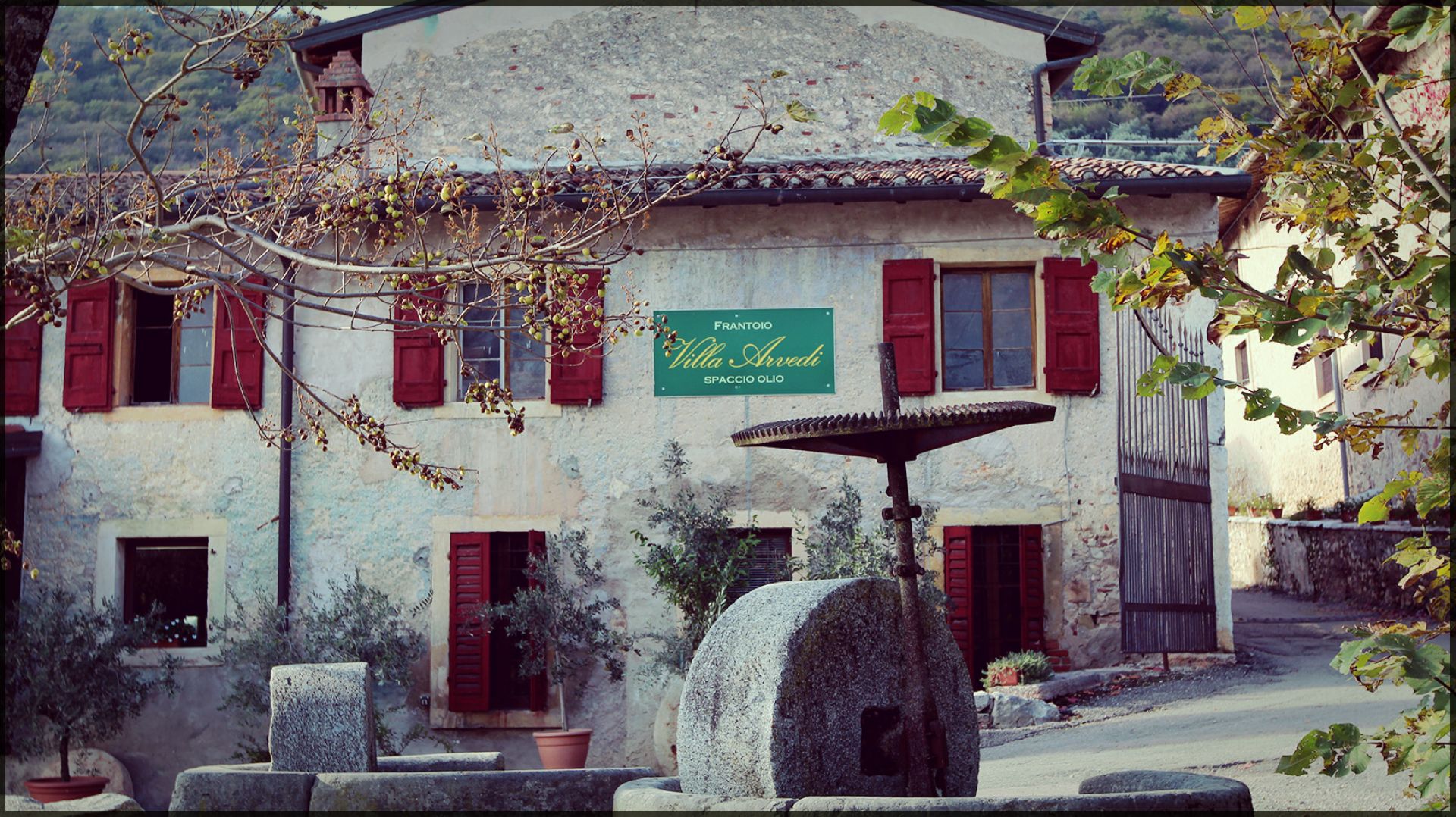
The splendid stately villa is completed and surrounded by the oratory, the buildings used for processing agricultural products (in particular the cellar and the oil mill), the garden, the orchard and the workers' residences.
The last descendant of the Allegri family, Lucrezia, born in 1780, married Count Orazio Sacramoso. To pay off the family's numerous debts, on 8 January 1824, she sold the villa and estate in Grezzana for 315,000 Italian lire to Giovanni Antonio Arvedi, a silk producer from Trentino who lived in the Sant'Eufemia district of Verona. The Arvedi family, after fortunately abandoning their intention to transform the noble mansion into a spinning mill, has been actively engaged in the cultivation of high-quality fruit and vegetables over the last two centuries. On the other hand, it is known that the villa had been equipped with an oil press since its origins and that the Cuzzano oil mill was the most sought-after in the valley. In addition, the spacious and well-equipped cellar documents the Arvedi family's passion for producing fine wines.
The Garden
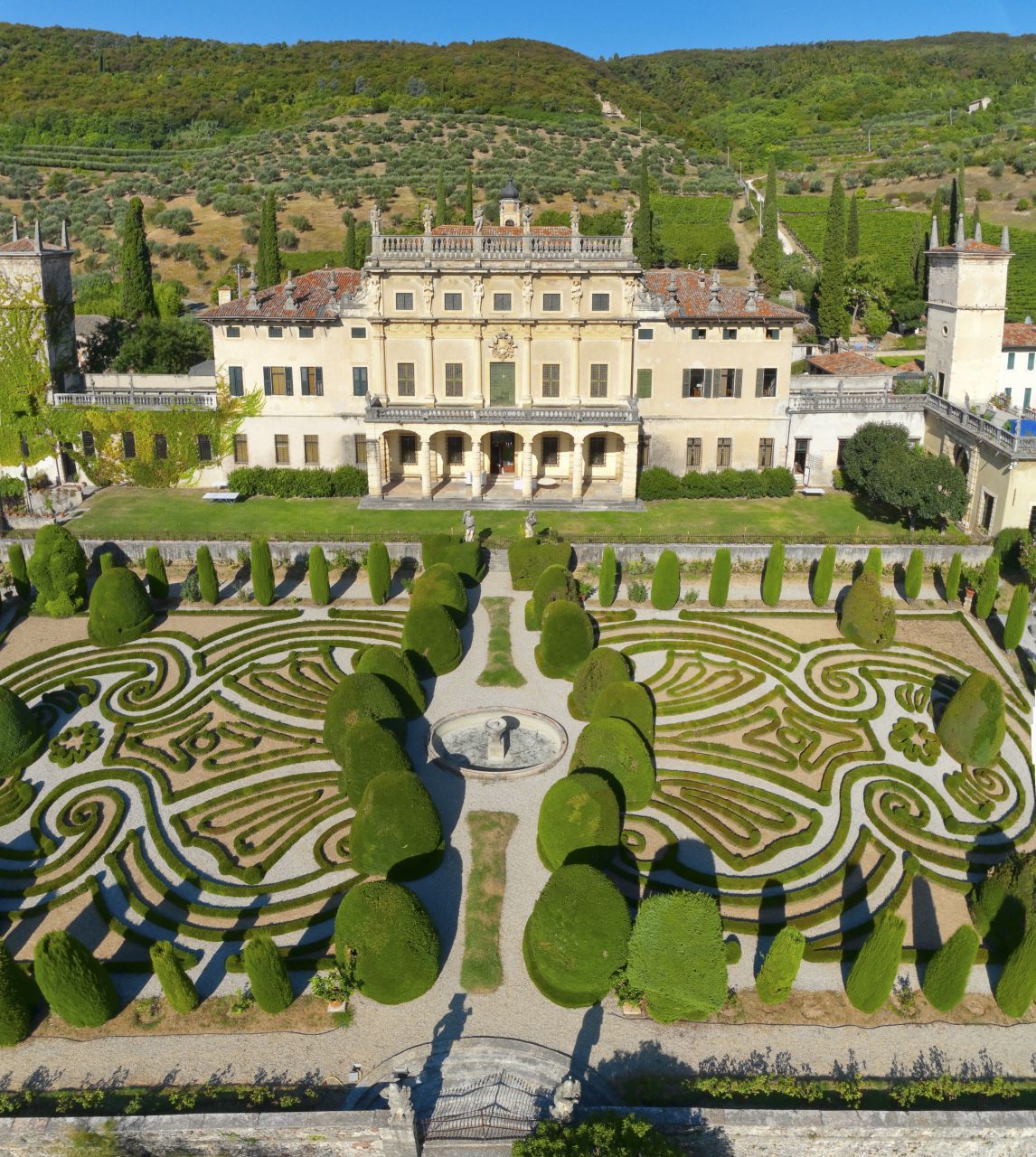
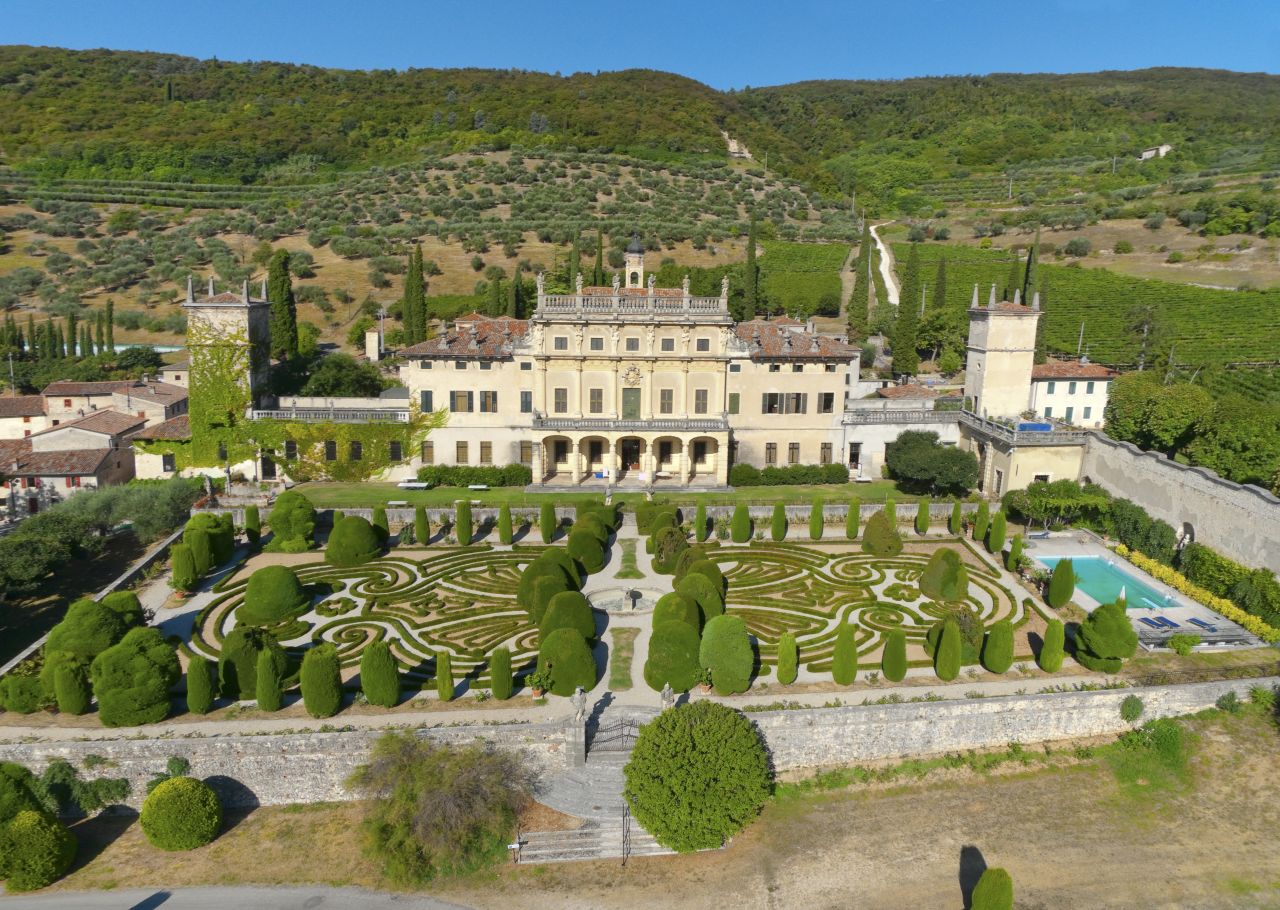
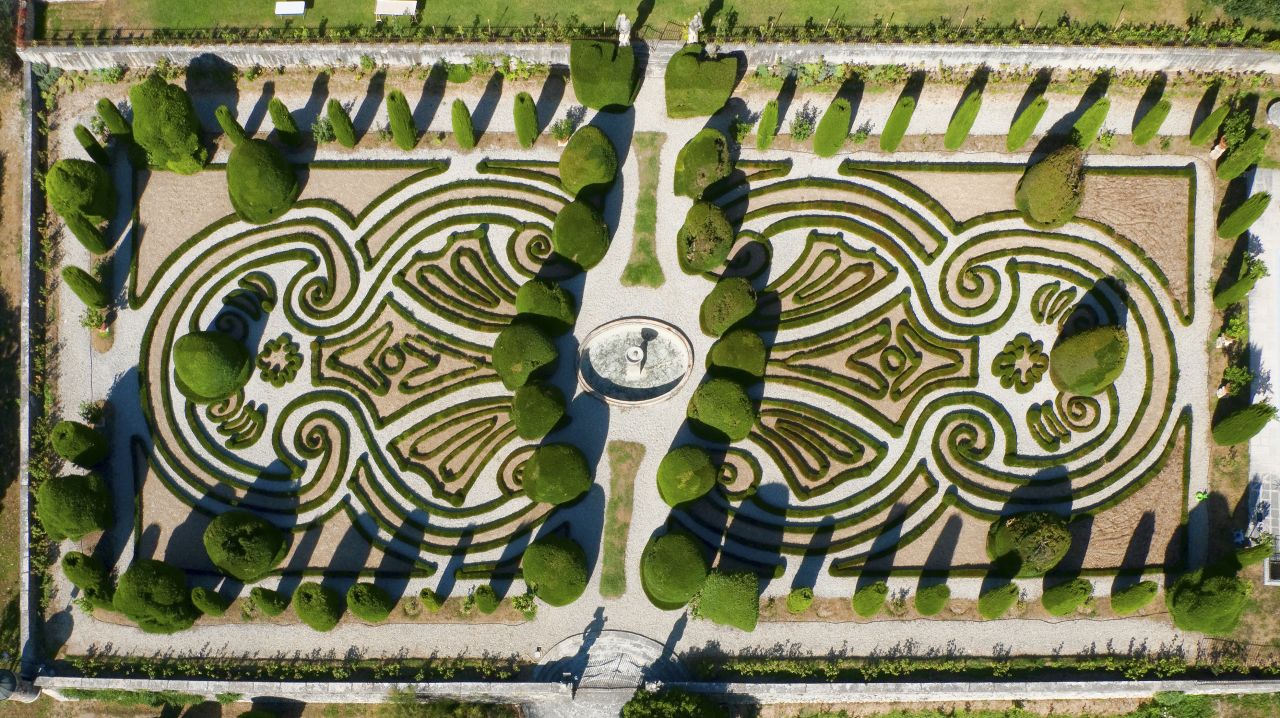
The garden, following an elaborate geometric pattern, extends over a large terrace at the foot of the villa. From the fountain, the spatial and aesthetic heart of the terrace, located in the centre of the driveway to the villa and surrounded by large boxwood bushes, two complex fan-shaped plantings with sinuous, typically Baroque volutes branch off.
Although enclosed on three sides by a low dividing wall and protected on the northern side, where harmful cold winds blow, by a high wall, the garden does not contrast with its surroundings but blends harmoniously with the designs, shapes and colours of the plants in the orchard and cultivated fields that surround it.
The Hall
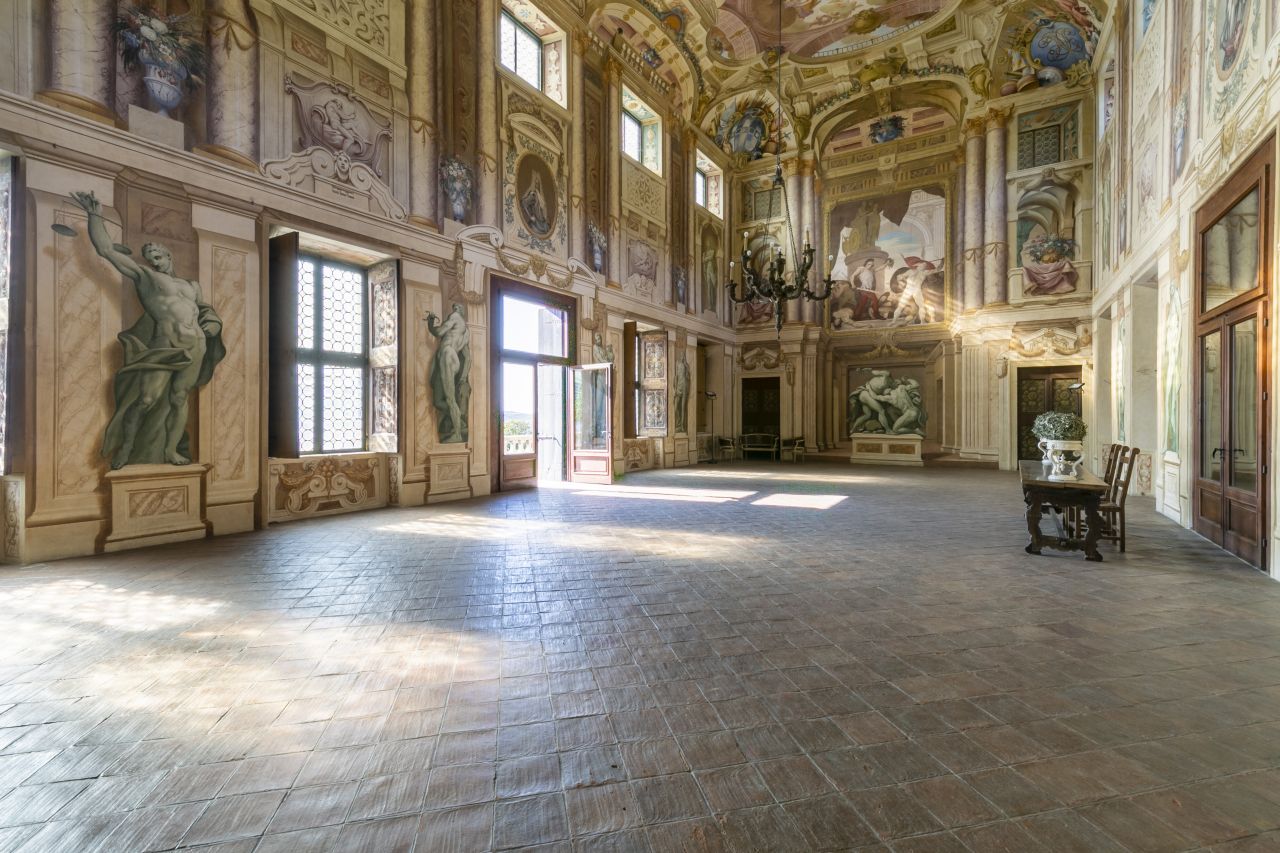
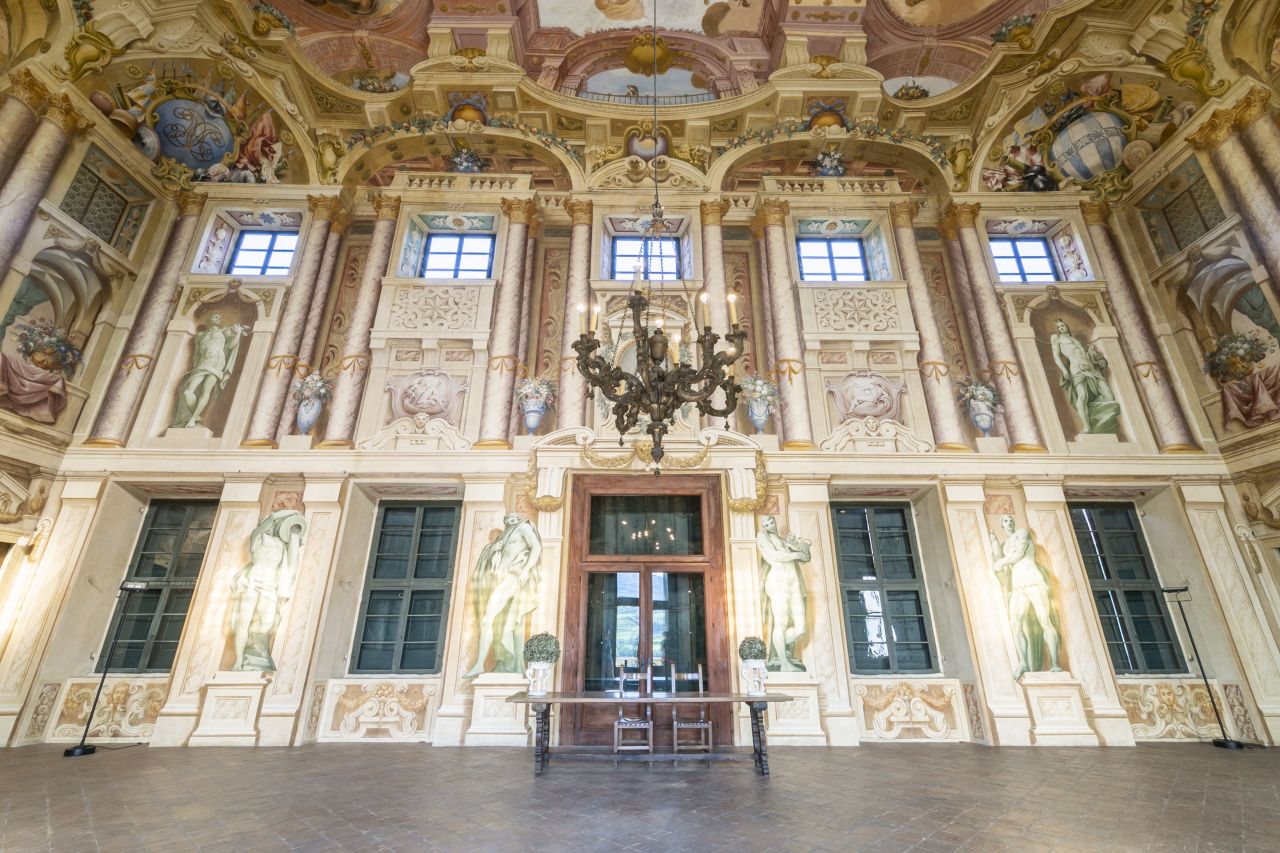
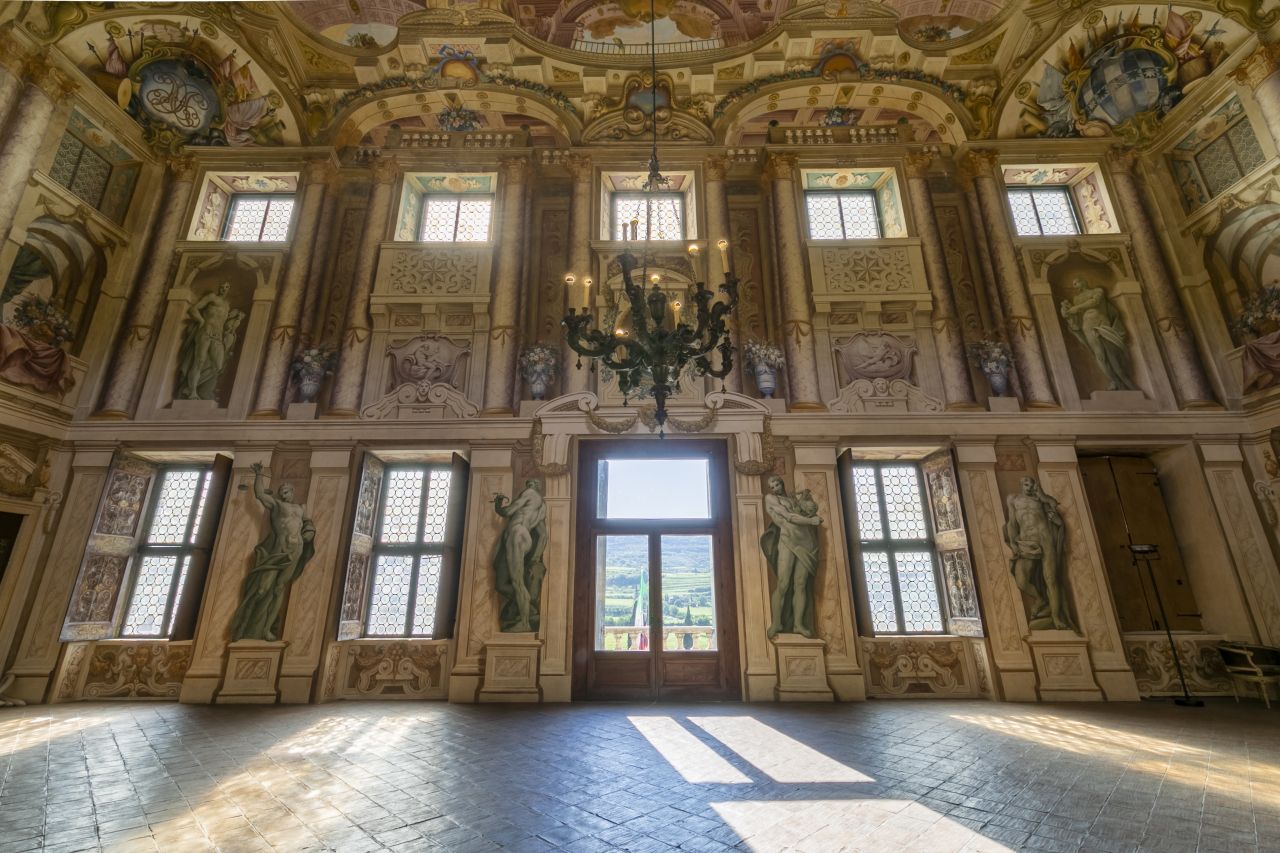
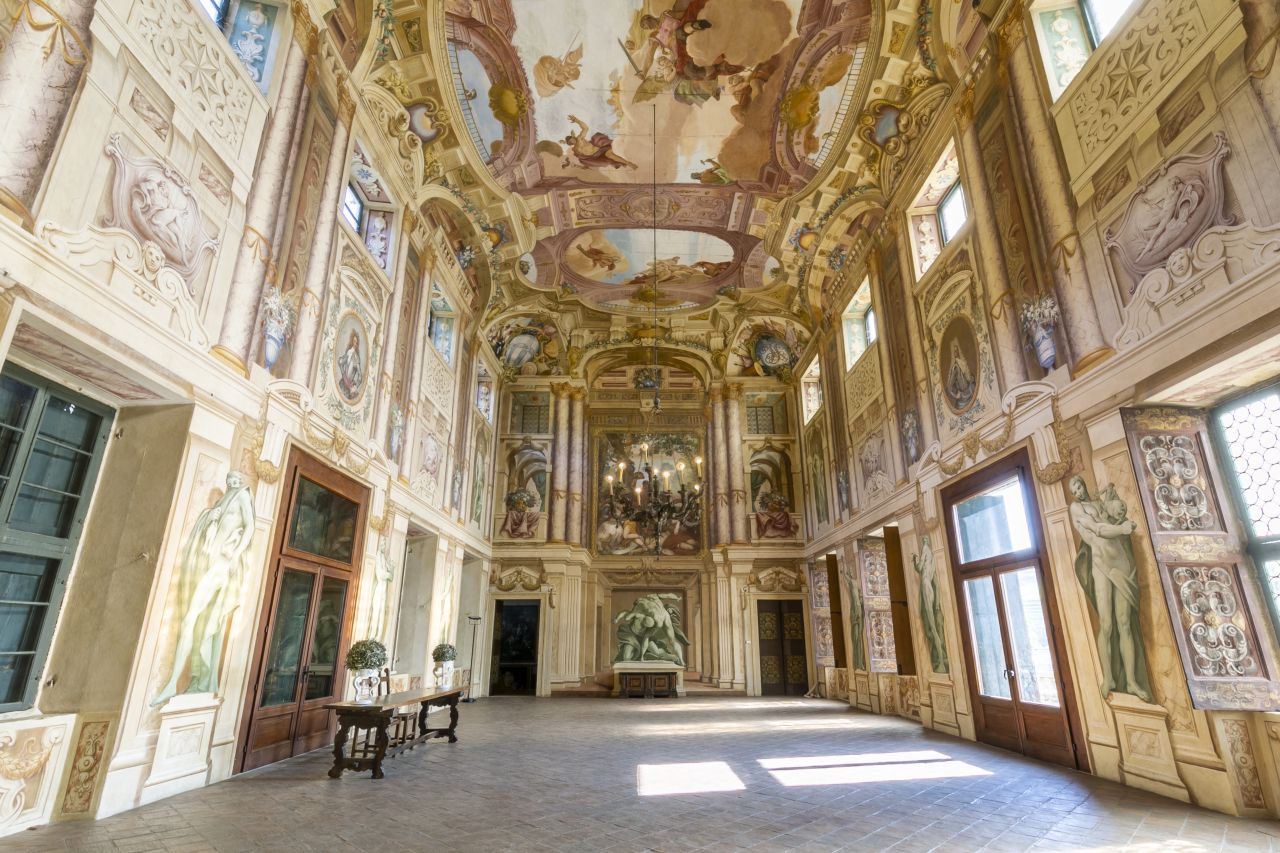
The stunning central hall on the first floor, frescoed by Dorigny in a precious classical style, presents an exuberant illustrated encyclopaedia of mythology, featuring the most important gods of Olympus (in the vault divided by three grandiose cornices) and where the victory of the Lapiths over the Centaurs (symbolising the victory of rationality over instinct) and of Perseus over Medusa (symbolising the ability to overcome even superior forces by combining strength with intelligence) are depicted. Men, like the ancestors of the Allegri family painted in the ovals above the entrances, under the constant protection of the gods, must exercise these virtues throughout the year, as indicated by the symbolic representations of the twelve months and the Titans supporting the signs of the zodiac that run along the long walls of the hall.
The villa within the villa
In addition to the well-known and famous artists (Paolo Caliari, Paolo Farinati, Ludovico Dorigny and Santo Prunati) who, according to Federico Dal Forno, made the villa in Cuzzano “one of the most prestigious in the Veneto region for its architectural structure, excellent state of preservation and the many cycles of frescoes it contains”, the work of the painter (Giuseppe Falezza, Verona 1658-1748), who left works of remarkable quality in the villa. Known as the “priest of the Allegri”, he was actually a friar of the Order of Calced Carmelites who lived in the convent of San Tommaso Cantuariense in Verona near the current Piazza Isolo.
Of particular note are the frescoes he painted in the right-hand tower of the villa, where he painted an overview of the villa itself set in a scene featuring four twisted columns supporting a lintel in the foreground, while in the background lies the protective and lush geographical space in which the majestic palace and garden are immersed.
The fresco is interesting because it shows us the villa as it was at the beginning of the 18th century. It is particularly interesting to note the different design of the garden, which on the right-hand side is bordered by a large greenhouse suitable for growing citrus trees.
Fra' Falezza's paintings are always embellished with exuberant floral elements and lightened by the constant presence of birds. In this fresco in the turret, garlands of flowers descend around the lintel, a magpie flies freely in the sky, while ducks, a rooster and a turkey perch above the lintel.
Falezza's great skill is also evident in the decoration of the villa's large aviary, filled with a festive crowd of birds and a labyrinthine tangle of foliage.
The Church of San Carlo
Like the villa, which was enlarged and completely rebuilt in the middle of the century, the first private oratory, dedicated to St. Francis, was also completely rebuilt in the last decades of the 17th century and subsequently dedicated to St. Charles.
A majestic staircase leads to the church, whose façade features the Allegri coat of arms, a small statue of the Madonna at the highest point above the small tympanum, and four other statues of saints (San Francesco, San Vincenzo Ferrari, San Carlo and San Romoaldo) below.
The interior contains valuable frescoes by Ludovico Dorigny, such as those depicting “St. Charles in conversation with God” and the prophet Elijah being carried up to heaven in his chariot, for which N. Ivanoff wrote that the painter “was able to make the void eloquent”. Two paintings by Balestra embellish the church: Saint John in the Desert and Saint Metrone. Above the marble altar with a table supported by two angels is a statue of Our Lady of Mount Carmel, to whom the oratory was dedicated for a short period.
The bell tower, which overlooks the sacristy, with its typical swollen spire, echoes the figurative forms of the balustrades of the staircase leading to the church in the balustrades of the belfry.
Photogallery