


San Martino Buon Albergo
MUNICIPALITY
The district of San Martino Buon Albergo is 5 kilometres apart from Verona and it includes the community of Case Nuove, Casette, Marcellise, Mambrotta e Ferrazze. San Martino is mentioned as an urban area already in 1146. However, it was already known in Roman times, as evidences by some of the headstones, of the 1st century a. C. found in various parts of the country. The country hasn't a history on his own, because it is strictly connected with the history of Verona. It was only in 1146 that San Martino Buon Albergo broke off Verona and in 1927 there was the annexation of the current territories.
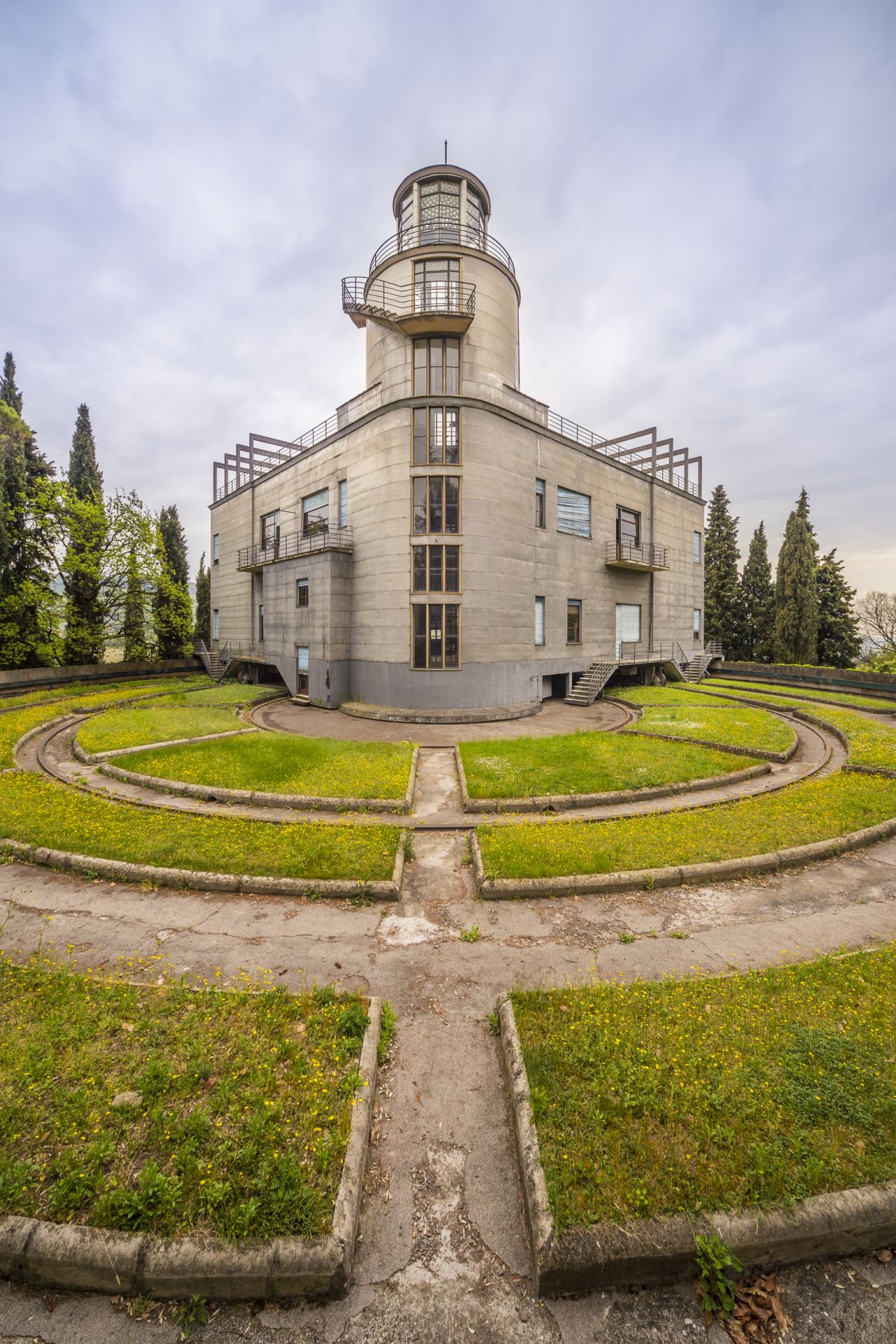
Villa Girasole is in the village of Marcellise. The Villa was built between 1929 and 1935, designed by Angelo Invernizzi. It is a modern building, which rotates with a 360° movement, following the path of the Sun, lighting up the interior with as much natural light as possible. The Villa is located in a park, with tree-lined streets, lawns, rows of cypress trees and a pool. In the park there is also collected archaeological finds from Roman times.
The Church of Marcellise initially depended from the nearby Pieve of Lavagna. The oldest new on the Church of Marcellise dates back to 1306. The Church contains several canvases by Giovanni Battista Caliari, who reproduced works of other fomous artist, such as “The meeting of Jesus with his Mother on Calvary” by Raffaello, or the Holy “Apollonia and Lucia” by Giovanni Caroto. On the first altar on the right, there is a large painting, which represent a miracle of Sant'Antonio of Padua.
Villa d'Acquarone, also told Musella, became a noble residence between 1654 and 1709 of a family from Verona, the Muselli, from which it takes its name. From 1506 the building was renovated and expanded. The current Villa is located around a square courtyard, with four bodies of different styles. North of the Villa, there are large halls, frescoed between 1689 and the end of the 17th century. Around the Villa, there is a seventeenth century garden, ending on the slopes, with a number of ornamental statues. The most hall important is the central one, also called “Hall of the Winds”, which shows on the ceiling mythological scenes of Air, Earth ans Sea Goddess. The Chaple is frescoed with miracles of Sant'Antonio of Padua.
Photogallery